Yamaguchi
Welcome to Kintai Bridge
Suspended like a series of frozen waves over the crystalline Nishiki River, Kintai Bridge is more than an architectural marvel; it is a testament to human resilience and the pursuit of aesthetic perfection. As you step onto the weathered cypress planks, feel the rhythmic vibration of history beneath your feet. Built in 1673 without a single metal nail, the bridge’s five undulating arches create a sensory symphony of cedar scents and the gentle roar of the water below. This is a place where the air feels lighter, filtered through the lush greenery of Mount Shiroyama. Whether draped in the ethereal pink of cherry blossoms or the stark, silent beauty of a winter snowfall, the bridge offers a spiritual transit from the mundane to the extraordinary. It is a destination for the discerning traveler seeking the soul of old Japan.
The Five Arches of Kintai
The bridge itself is a masterclass in Edo-period engineering. Walking across its rhythmic peaks and valleys, you notice the intricate joinery—a complex puzzle of timber that has withstood centuries of flooding. Each arch provides a different vantage point of the riverbed stones, which glint like scattered jewels in the afternoon sun. The tactile sensation of the hand-carved wood under your grip connects you directly to the craftsmen of 1673. It is a physical meditation, a slow-motion transit where the world slows down to the pace of a flowing river.
Iwakuni Castle & The Ropeway
Ascend the verdant slopes of Mount Shiroyama via the ropeway to reach the reconstructed Iwakuni Castle. The scent of ancient pine needles fills the air as you wander the ramparts. From the top floor, the Kintai Bridge looks like a delicate wooden toy bridging the turquoise water, with the Seto Inland Sea shimmering on the horizon. The castle's interior houses a formidable collection of samurai weaponry, where the cold steel of katanas tells stories of the Kikkawa clan's dominance. It is a panoramic reward for those who seek the high ground.
Kikko Park & The Shirohebi Shrine
Once the residence of the Kikkawa lords, Kikko Park is a sanctuary of manicured lawns and weeping willows. The highlight is the Shirohebi Shrine, home to the rare Iwakuni White Snakes. These ivory-scaled creatures are revered as messengers of the goddess Benzaiten. Seeing their graceful, silent movements behind glass is a surreal, almost otherworldly experience. The park is a tapestry of seasonal colors, from irises in June to fiery maples in November. It’s the perfect place to inhale the scent of damp earth and blooming flora while contemplating the region's spiritual heritage.
Local Soul Food
Tastes you can't find anywhere else.

Iwakuni-zushi (The Lord's Sushi)
Often called 'Tonosama-zushi,' this is a vibrant, multi-layered pressed sushi. Imagine the crunch of local lotus root, the sweetness of shredded egg, and the delicate tang of vinegared rice. It is a visual feast, traditionally made in large wooden frames. Each bite is a harmonious explosion of textures and oceanic umami that has fueled local lords for generations.
Iwakuni Ohira (Root Vegetable Stew)
A soul-warming stew featuring taro, lotus root, and chicken simmered in a light, savory dashi. The vegetables are cut into large chunks, retaining their earthy integrity. The steam carries the fragrance of soy and mirin, offering a comforting embrace on a cool day. It is the quintessential taste of Yamaguchi’s agricultural heart, simple yet deeply sophisticated.
Musashi's 100-Flavor Soft Serve
An iconic stop near the bridge, offering over 100 eclectic flavors ranging from classic matcha to adventurous wasabi or even ramen flavor. The cold, velvety cream melts instantly, providing a playful contrast to the historical surroundings. It’s a sensory challenge—sweet, salty, or spicy—that adds a modern, whimsical layer to your Iwakuni pilgrimage.
Premium Stays
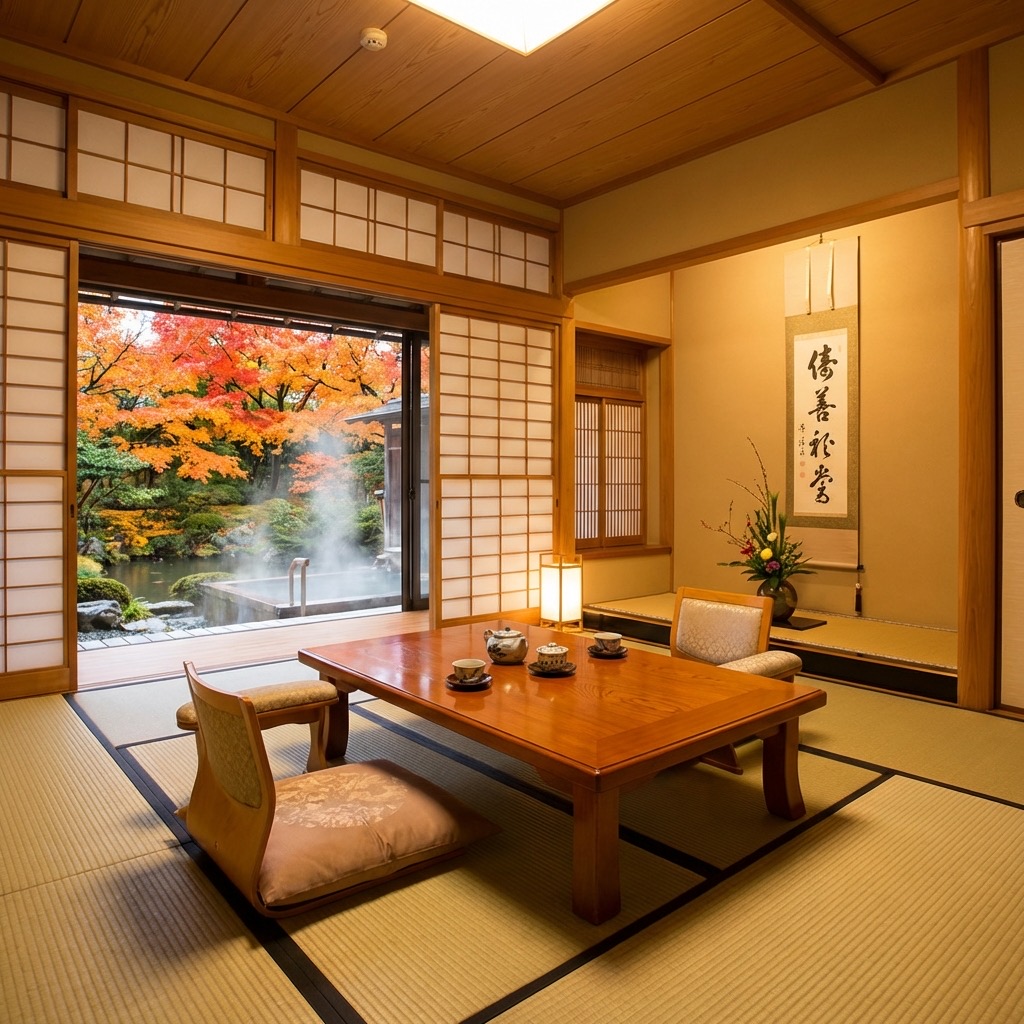
To truly capture the essence of Iwakuni, stay within walking distance of the Nishiki River. Watching the bridge illuminate at night from your window is an experience that justifies the premium.
Getting There
From JR Iwakuni Station, take a local bus (Platform 1) directly to the Kintai-kyo bus stop. Buses run every 15-20 minutes. If arriving via Shinkansen, get off at Shin-Iwakuni Station and take a 12-minute bus ride.
FAQ
Inspired?
Share this destiny with someone special.