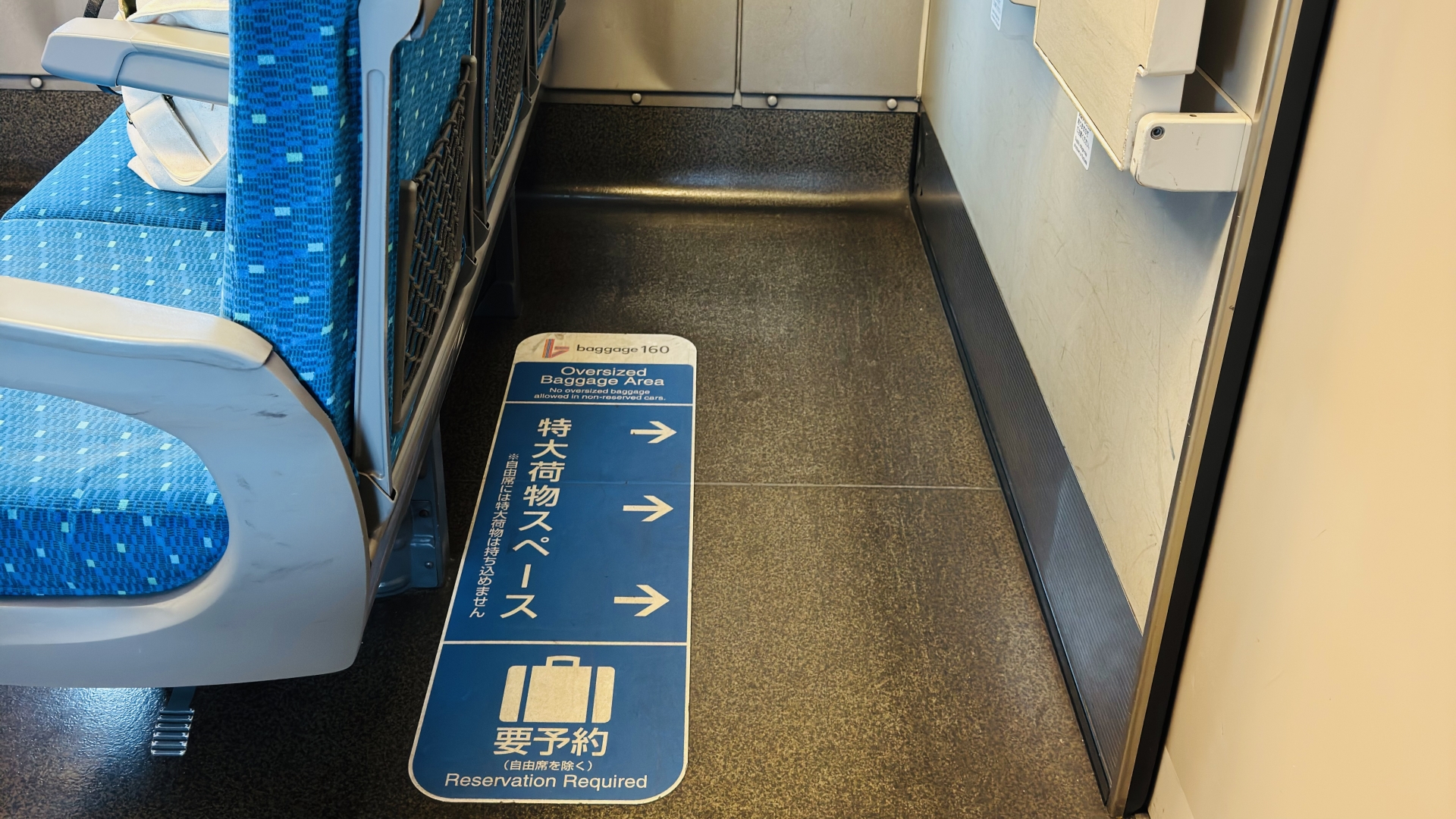
The 160cm Rule: Why Your 'International' Suitcase is a Target
I used to think my suitcase was 'standard size' until I got to Japan in 2026. The magic number you need to remember is 160cm. That’s the sum of the height, width, and depth of your bag. If your bag is bigger than that, you are officially in the 'Oversized' category. I’ve found that almost any 28-inch hardshell suitcase—the kind we all use for long trips—will trigger this rule. In 2026, the stations aren't taking your word for it anymore. Major hubs like Tokyo and Kyoto now have automated sensors at the ticket gates that can flag an oversized bag before you even reach the platform. I saw a family last week getting pulled aside because their expansion zippers pushed their bags just over the limit! It’s not just about the 1,000 yen fine; it’s about the safety and space of the train. The overhead racks on the Shinkansen are great, but they are built for bags under 160cm. If you try to jam a giant trunk up there, it's a hazard to everyone. My savvy hack is to measure your bag *after* you’ve finished packing. I keep a small digital scale and tape measure in my flight bag now. It sounds intense, but it beats the stress of an on-board confrontation. To make sure I always have the latest transit maps and rules at my fingertips, I never travel without my high-speed data connection
Savvy Choice
Klook Shinkansen Booking
I use Klook to book my Shinkansen tickets because it handles my international card easily and has a clear checkbox for oversized baggage seats.
Check My Train Times
. It allows me to use the JR measurement app which uses AR to tell me instantly if my bag needs a reservation. In the crowded reality of 2026, being prepared is the only way to keep the experience 'fast' and 'smooth' like the train itself.
The Anatomy of a Baggage Seat
When you book, you’re looking for 'Seats with Oversized Baggage Area.' This is the space behind the very last row of a car. I love these seats because you essentially get a huge amount of extra space and your bag is literally right behind your head. In 2026, the newer N700S trains also have 'Smarter Shelves' in the hallways that you can lock with a QR code, which I find is even better for peace of mind if you're traveling in the Green Car.
Digital Booking Secrets: Outsmarting the SmartEX App
In 2026, the SmartEX app is our best friend, but it can also be a bit of a nightmare. I’ve spent countless hours trying to get it to accept my international credit card! The savvy secret I’ve discovered is that the app is much happier if you use Apple Pay or Google Pay to bypass those '3D Secure' errors that plague foreign cards. Once you're in, you’ll see the option to select a seat with baggage space. These are free to reserve if you do it when you buy the ticket, but because there are only about 5 to 10 of these seats per car, they sell out fast! I once waited until two days before my Tokyo-to-Kyoto trip and found every single baggage seat was gone for the entire morning. I had to move my whole schedule by four hours! Now, I book my seats as soon as my itinerary is set, usually 30 days in advance. If you’re using a JR Pass, you can’t use the app as easily, so you have to head to the ticket machines at the station. I’ve found that the machines in smaller stations often have more availability for these seats than the ones in massive hubs like Shinjuku. To make my life even easier, I always book my hub-adjacent hotels through a reliable portal
Logistics Pro
Expedia Hub Hotels
I always search for hotels within walking distance of the Shinkansen gates. It makes shipping and receiving bags so much smoother.
Find My Station Hotel
. By staying just five minutes from Tokyo Station, I can nip over to the ticket machines on my first night in Japan and secure all my reservations at once while the station is quiet. It turns a potential logistical headache into a 5-minute task. Remember, in 2026, the Shinkansen is more popular than ever—don't leave your luggage space to chance!
The 'Empty Hands' Magic: Why I Ship My Bags Ahead
If you want the real 'Blogger's Truth' about traveling Japan in 2026, it’s this: Stop carrying your suitcases! I’ve reached a point where I almost never bring a large bag onto the Shinkansen. Instead, I use the 'Black Cat' (Takkyubin) forwarding service. For about 2,500 to 3,500 yen, I send my big bag from my hotel in Tokyo and have it delivered directly to my room in Kyoto the next day. This is the ultimate Shinkansen hack because it lets me book *any* seat I want—including the famous Mt. Fuji side (Seats D and E)—without being restricted to the baggage-row seats. I just pack a small backpack with my essentials, hop on the train, and enjoy the views with a bento box and an empty lap. Walking through the vertical maze of Tokyo Station with just a backpack makes me feel like I’m in a different league compared to the struggling tourists dragging massive trunks. In 2026, this 'Hands-Free' movement is huge. Some premium hotels now even include one free bag transfer per stay! It also means I don't have to worry about the 160cm rule, the penalties, or the AI sensors at the gate. I land at the airport, drop my bags at the 'Hands-Free' counter, and I don't see them again until I'm checking into my hotel 500km away. It’s the most sophisticated way to see Japan, and in the heat and crowds of 2026, it saves your energy for the things that matter—like exploring hidden temples and eating the world's best sushi. If you’re traveling with family or have more than one large bag, forwarding isn’t just a luxury; it’s a better way to live.
| Bag Size (Total Sum) | My Savvy Strategy | The Blogger's Verdict |
|---|---|---|
| Under 160 cm | Use the overhead rack | Free and easy. No reservation needed! |
| 160 cm to 250 cm | Book the baggage seat EARLY | A must-do to avoid the ¥1,000 penalty. |
| Over 250 cm | Must use forwarding service | Strictly prohibited on the Shinkansen! |
| Any Large Bag | The 'Black Cat' Hack | My favorite way to travel. Pure freedom. |