The Great Legroom Mystery: Why I Stopped Fearing the Night Bus
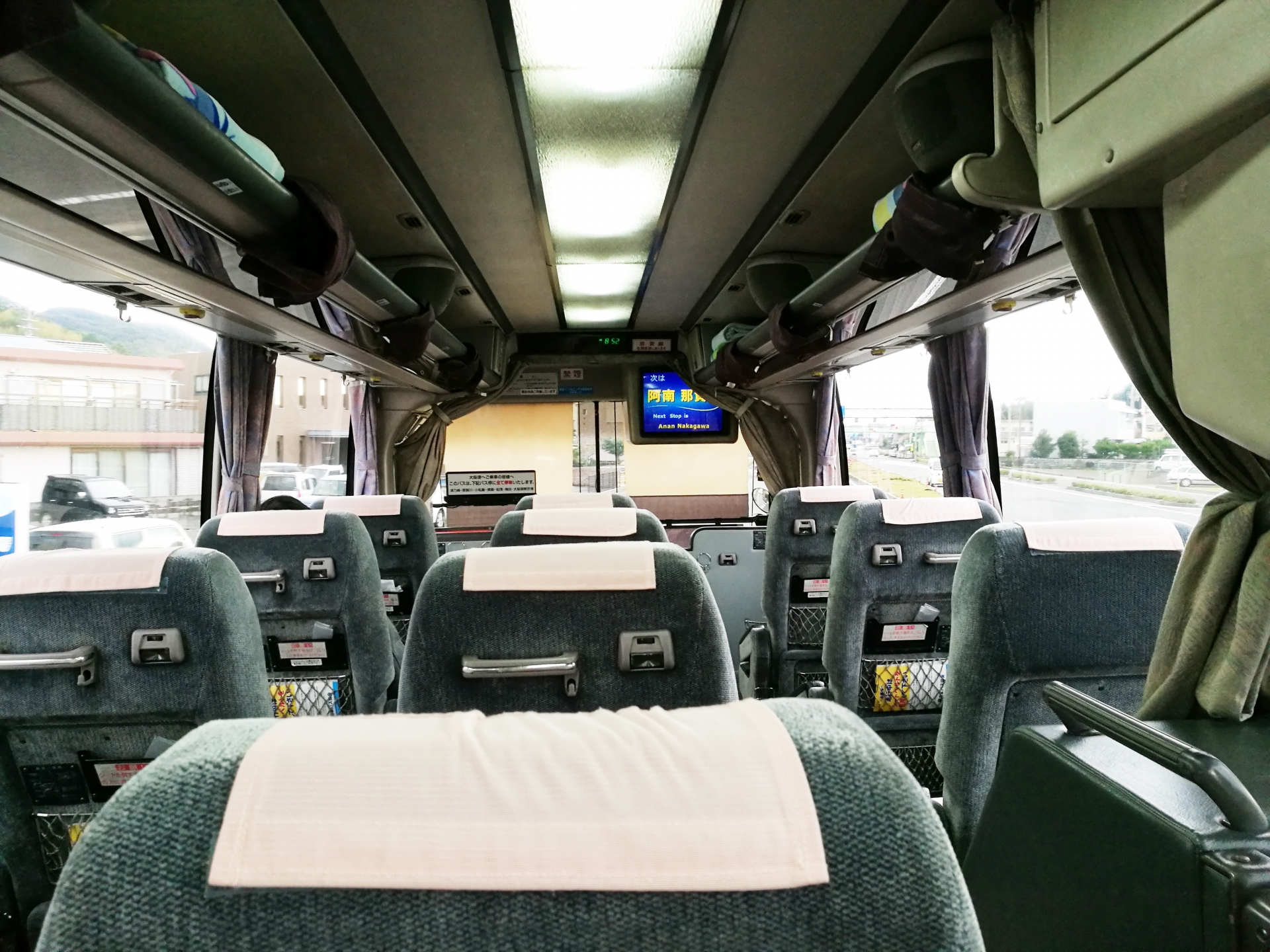
I still remember my first trip from Tokyo to Osaka. Being a 185cm guy, I walked onto that bus with a sense of impending doom. I had visions of my knees pinned against my chin for eight straight hours. But here is the truth I discovered: Japan’s bus network isn't a monolith. There is a massive spectrum of comfort, and the 'Standard' 4-row buses you see advertised for the price of a cheap lunch are essentially designed for petite frames. If you’re coming from North America, Europe, or anywhere where 'average' height is a bit taller, those seats will feel like a challenge. I learned the hard way that 'Standard' usually means a seat pitch of around 80-85cm. That sounds okay on paper, but once the person in front of you reclines? Game over. nnThat is why I now exclusively use booking platforms that allow me to filter by seat type. I highly recommend using Klook to browse these options because their English interface actually specifies the seat configuration clearly, which saves you from the 'Google Translate' guessing game at 1 AM.
Traveler's Choice
Klook Highway Bus Booking
It's the easiest way to see seat maps and configurations in English, ensuring you get that 3-row independent seat.
Book Your Bus
After switching to the 'Relax' or 'Combi' types, my experience changed from 'survival' to 'actually sleeping'. These seats often come with a 'canopy'—a little fold-down hood that covers your face. It feels a bit like a futuristic pod, but it’s amazing for privacy and blocking out the occasional light from passing cars. Plus, the newer 2025 models have significantly improved the padding in the lumbar region, which was always my biggest complaint. nnAnother thing to keep in mind is the 'Busta' experience. When I first arrived at Shinjuku Busta (the massive bus terminal in Tokyo), I was overwhelmed. It’s like an airport but with more vending machines. My tip? Arrive 30 minutes early. The announcements are in English, but the crowds are thick. I found that having my QR code ready on my phone was the only thing that kept me from panic-sweating. Most buses have a luggage limit of one large suitcase in the hold, so don't try to bring your entire life with you. I usually keep a small 'bus bag' with my neck pillow, earplugs, and a portable charger. Even in 2025, while most buses have USB ports, some older models still have the two-prong Japanese outlets, so keep an adapter handy just in case. It's these little details that turn a stressful night into a smooth transition between cities.
The 'Busta' Experience: Navigating the Hubs
Shinjuku Busta is the heart of the network, but don't sleep on the Umeda terminal in Osaka or the Nagoya Station hubs. Each has its own quirks. In Tokyo, the terminal is on the 4th floor of the Shinjuku Station complex. It’s incredibly efficient, but the sheer volume of people can be jarring. I always grab a heavy meal before boarding because eating on the bus is generally frowned upon—especially anything with a strong smell. There are plenty of convenience stores nearby to grab a bottle of water and some light, quiet snacks like a protein bar or some chocolate. Just remember to take your trash with you when you leave; it's the golden rule of Japanese travel.
The 'Three-Row' Secret: My Shortcut to a Good Night’s Sleep
If you take away one thing from my experience, let it be this: '3-row independent' is the holy grail of Japanese bus travel. Unlike a standard bus where seats are paired (2+2), these buses have three separate columns of seats with aisles in between each one. This means you have your own armrests on both sides and, crucially, no neighbor to climb over when you need to use the restroom. I found that these seats often come with a 'canopy'—a little fold-down hood that covers your face. It feels a bit like a futuristic pod, but it’s amazing for privacy and blocking out the occasional light from passing cars. The reclining angle on these is often 140 degrees or more, which is a massive jump from the stiff 110 degrees on budget lines. nnIn 2025, the 'Shell' seat technology has become much more common. These seats are built into a hard plastic shell, so when you recline, the seat slides forward and down within its own space. This is a game-changer because you never have to worry about the person in front of you slamming into your laptop or your knees. It creates a private little cocoon that makes the 8-hour journey feel like a few hours of decent rest. After a long night on the road, I always make sure I have a hotel booked near the arrival station for a 'day-use' shower or an early check-in. I usually check Expedia for hotels near Kyoto or Osaka station that offer early luggage drop-off so I can start exploring immediately without dragging a suitcase through a temple.
Best for Comfort
Expedia Hotel Search
Perfect for finding 'Early Check-in' hotels near major bus terminals like Shinjuku or Umeda.
Find a Hotel
It makes the transition from 'bus-mode' to 'tourist-mode' so much smoother. nnI’ve also noticed that the 3-row buses tend to have better amenities. We're talking slippers, blankets that are actually large enough to cover a human, and sometimes even a small amenity kit with an eye mask. If you're traveling between major cities like Tokyo and Hiroshima, the price difference is often less than the cost of a single bowl of high-end ramen. For the sake of your back and your sanity, it's the best investment you can make. You're essentially paying for a moving hotel room, and when you factor in the money you save on a night's accommodation, the 'luxury' bus actually becomes the most logical financial choice for the savvy traveler.
Surviving the Silence: The Unwritten Rules of the Japanese Road
The first time the lights went out on my bus to Hiroshima, I was shocked by how quiet it got. I’m talking 'you can hear a pin drop' quiet. In Japan, the night bus is a sacred space of silence. I once saw a traveler get a very polite but firm 'shhh' from a driver for whispering too loudly to their friend. My advice? Get your snacks ready before the lights go out. Once those main cabin lights are killed—usually about 15 minutes after departure—the expectation is that you are either sleeping or using your phone on the lowest brightness setting with headphones. nnSpeaking of snacks, the bus will stop every 2-3 hours at a 'Service Area' (S.A.). These are not your average gas stations; they are culinary wonderlands. You’ll find local specialties, high-end bakeries, and rows of vending machines. However, the stop is usually only 15 to 20 minutes. I always take a photo of my bus’s license plate and the bay number because, at 3 AM, every white bus in the parking lot looks exactly the same. Trust me, you do not want to be left behind at a rest stop in rural Shizuoka because you couldn't find your bus. The drivers are punctual to a fault; if the sign says the bus leaves at 3:15 AM, it will be pulling out of the bay at 3:15:01 AM. nnAnother pro tip: wear layers. The climate control on these buses can be unpredictable. Sometimes it’s a tropical 25°C, and other times it feels like you’re crossing the Arctic. I always wear a comfortable hoodie and compression socks. The socks might look dorky, but they are a lifesaver for preventing that 'heavy leg' feeling after sitting for hours. Also, keep your shoes off. Most buses provide slippers, and it’s much more comfortable (and culturally appropriate) to keep the seating area clean. By following these small unwritten rules, you not only ensure your own comfort but also earn the respect of your fellow travelers, making the whole vibe of the bus much more pleasant for everyone involved.
| Seat Type | Est. Pitch (cm) | Best For... | Comfort Level |
|---|---|---|---|
| Standard 4-Row | 80-85 | Budget students | Low - Tight squeeze |
| Relax 4-Row | 90-95 | Average height | Medium - Decent |
| 3-Row Independent | 105-115 | Tall travelers | High - Like a bed |
| Premium/Luxury | 120+ | Splurging | Elite - Private room |