The Moment the Clay Fights Back
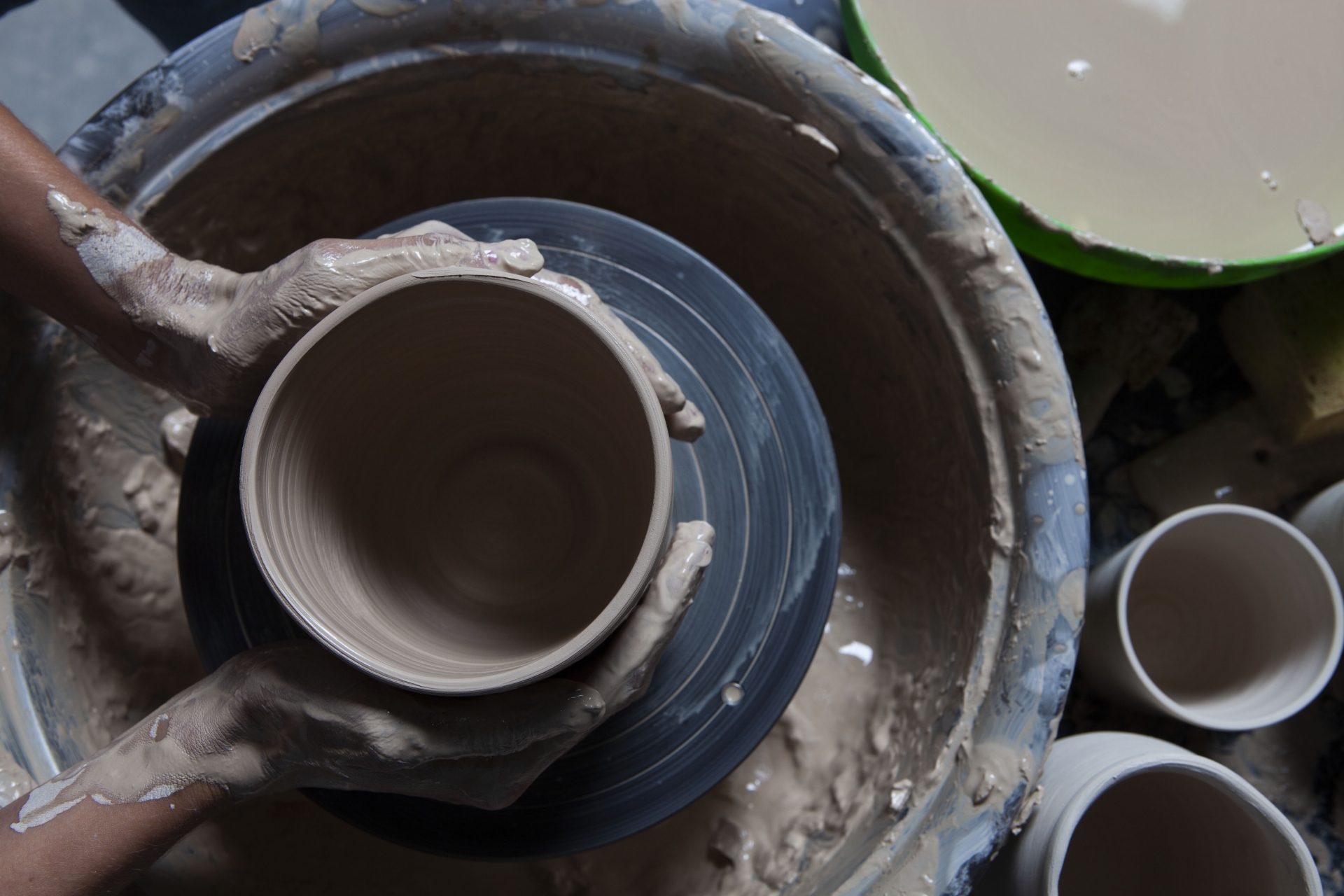
The instructor, a man named Tanaka-san who looked like he’d been carved out of a piece of weathered driftwood, didn't say a word for the first ten minutes. He just raised one eyebrow as my 'perfectly centered' lump of clay wobbled, listed to the left, and then spectacularly disintegrated into a gray puddle on the wheel. I’d been in Japan for five years at that point, thinking I’d mastered the art of 'Zen' and patience. Nope. Five minutes into my first pottery class in Kyoto, I was sweating, my lower back was screaming, and I had a streak of mud across my forehead that I wouldn’t discover until I looked in a mirror two hours later. But here’s the thing—the moment I stopped trying to force the clay to be a bowl and started actually feeling the vibration of the wheel through my palms, everything changed. It’s a sensory overload you don’t get from a temple tour. The smell of damp earth is thick in these old studios, a heavy, metallic scent that stays in your nostrils for hours. The sound of the electric motor is just a low hum beneath the chirping of cicadas outside, creating this weirdly hypnotic rhythm. I finally booked my session through a local craft workshop
Top Rated
Book a Kyoto Pottery Class
Get hands-on with a 90-minute wheel-throwing session in the heart of the historic Higashiyama district. You'll make two pieces with professional guidance and choose your favorite glazes.
This studio is famous for its patient teachers who speak great English—perfect for beginners who are afraid of failing.
Book Now ↗
and honestly, it was the first time in months I hadn't checked my phone for an hour. There’s something primal about it. You’re making a mess, you’re failing, and then, suddenly, a wall of clay rises up between your fingers. It’s thin, it’s cool to the touch, and it’s actually staying upright. I almost cheered, but Tanaka-san just gave me a tiny, almost imperceptible nod. That was better than a standing ovation. You realize quickly that the clay has its own personality. If you're too aggressive, it snaps. If you're too timid, it just sits there like a lump. It’s a delicate conversation between your hands and the earth. I remember looking at the other people in the room—a couple from France and a solo traveler from Australia—and we were all wearing the same expression of intense, slightly panicked concentration. It’s a great equalizer. No matter how much money you have or how many followers you have on Instagram, the clay doesn't care. It will collapse on you just the same. By the end of the first hour, I had managed to produce something that vaguely resembled a bowl, though it was definitely leaning to the right. Tanaka-san came over, put his hands over mine for a split second to steady the rim, and suddenly it looked like a real object. That tiny bit of help made all the difference. It’s not about being a master; it’s about that one moment where it all clicks.
If you have the choice, pick the 'electric wheel' (rokuro) over the 'hand-building' (tebineri) method. It's harder to master, but the feeling of the clay spinning is way more addictive.
What You Need to Know Before You Get Muddy
Let’s talk about the stuff the brochures don’t tell you. First off, if you’re wearing your favorite white linen shirt, you’ve already lost the game. I made the rookie mistake of wearing my 'good' jeans, and they were never the same again. Most studios give you an apron, but clay has a way of defying physics and landing in your hair, your shoes, and places you didn't know existed. And guys, if you have long fingernails, trim them. I saw a girl next to me accidentally gouge a hole in her nearly-finished vase because she forgot she had acrylics on. It was heartbreaking. The process usually goes like this: you get a brief demo, you fail for twenty minutes, the teacher 'saves' your piece, and then you spend the last thirty minutes actually making 2-3 items. You’ll choose a glaze color—usually something classic like 'shino' white or a deep 'seto' black—and then you leave. This is the part that trips people up: you don't take the bowl home. It has to dry, be fired in a kiln, glazed, and fired again. It takes about 1-2 months. If you’re staying at a nice place like a traditional ryokan in the Higashiyama area
Authentic Stay
Stay Near the Studios
The Higashiyama area is packed with traditional pottery workshops and narrow stone streets. Staying here means you can walk to your class and beat the crowds to the nearby Kiyomizu-dera temple.
Waking up in a machiya townhome is the only way to truly experience the 'Old Kyoto' vibe before the day-trippers arrive.
Find Hotels ↗
, you can sometimes have the studio ship it to your next hotel if you're staying in Japan for a while, but most people ship it internationally. It’s not cheap, but getting a box from Japan two months after your trip is like a gift from your past self. On top of that, the shipping process is actually quite reliable. I was worried my lopsided bowl would arrive in pieces, but the Japanese packing standards are legendary. It arrived in Tokyo wrapped in about four layers of bubble wrap and specialized cardboard. Oh, and here's what most people miss: the technical Japanese instructions can be a bit overwhelming. Don't panic. The teachers are masters of 'hand-guiding.' They’ll literally put their hands over yours to show you the pressure. It’s intimate, slightly sweaty, and totally worth it. You'll hear words like 'heso' (belly button) for the center of the clay or 'rokuro' for the wheel. You don't need to be fluent, but learning a few basic terms makes the instructor smile. I also recommend bringing a hair tie if you have long hair. There is nothing worse than a stray lock of hair getting caught in a spinning wheel of wet mud. Trust me on this. You'll also want to make sure you have some cash on hand, as some of the older, more authentic studios in the back alleys of Kyoto still don't take credit cards for the shipping fees.
Don't try to make a giant ramen bowl on your first try. The walls will collapse. Aim for a small tea cup or a 'yunomi.' It's easier to keep the clay stable, and you're much more likely to actually finish it.
The Practical Side of Getting Your Hands Dirty
So, where should you actually do this? Kyoto is the obvious choice because the 'Kiyomizu-yaki' style is legendary, and the studios are tucked away in these beautiful sloped streets. But if you want to be a bit of a rebel, head to Mashiko in Tochigi. It’s a 'pottery town' where even the bus stops are made of ceramic. It’s about two hours from Tokyo, and the vibe is much more rugged and 'artist-colony' than the polished streets of Kyoto. Prices are pretty consistent across the board—expect to pay around 4,000 to 6,000 yen for the experience itself, plus another 3,000 to 5,000 yen for international shipping. I know, the shipping costs as much as the class, but when you’re drinking your morning coffee out of a cup you wobbled into existence, you won't care about the 40 bucks. Most studios have English-speaking staff these days, or at least a very detailed iPad with video instructions. The sessions usually last about 60 to 90 minutes. Don't book this on your last day in Japan—you need a bit of brain space to enjoy the slow pace. I’d recommend a morning slot, then spend the afternoon walking through the nearby temples or shops while your hands still feel that weird, tingly 'clay' sensation. It’s one of the few things in Japan that feels truly tactile in our digital world. Another thing to keep in mind is the season. In the winter, the clay is freezing cold, and your hands will go numb. In the summer, the studios (which are often in old buildings) can be sweltering. Spring and autumn are the sweet spots. I remember going in November, and the contrast between the cold air outside and the warm, humid air of the kiln room was incredible. Just remember: it’s supposed to be fun. If your bowl looks like a squashed melon, call it 'wabi-sabi' and own it. That’s what I did. My first bowl is so thick it could probably stop a bullet, and the glaze is uneven, but it’s the only thing in my kitchen that has a story. Every time I use it, I'm back in that dim studio in Higashiyama, listening to the hum of the wheel and the quiet instructions of Tanaka-san. It's a memory you can actually hold. Seriously. Go early, take your time, and don't be afraid to get absolutely covered in mud. It's the best way to spend a morning in Kyoto.
Check the shipping policy before you pay. Some smaller studios only ship within Japan. If they don't ship internationally, you can use a service like Yamato Transport, but it's a huge hassle. Stick to the studios that have an 'International Shipping' sign in the window.