Why I Loved This: The Moment I Stopped Being a Clumsy Tourist
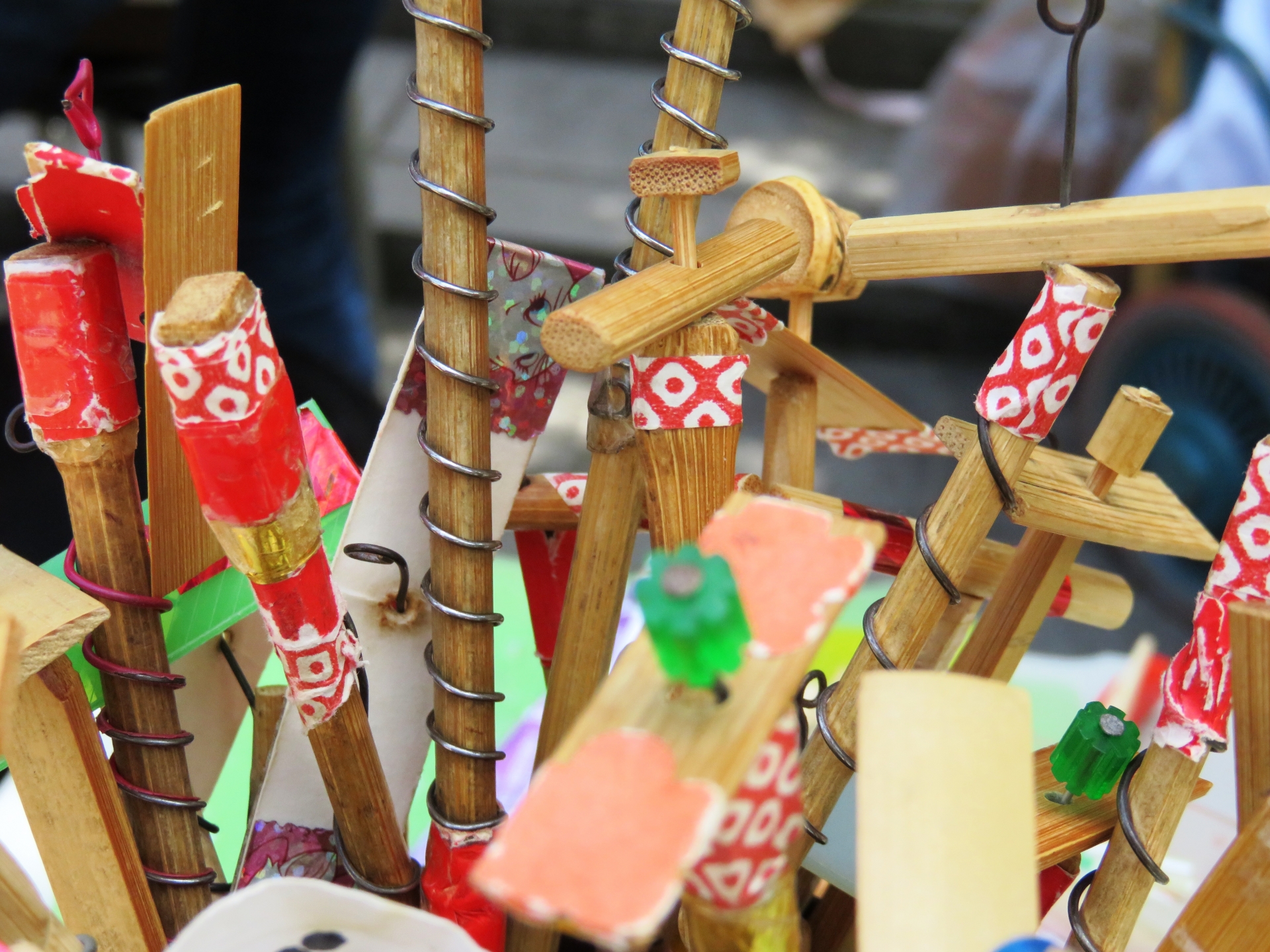
I’m hunched over a low wooden stool in a drafty workshop in Beppu, sweating over a piece of green timber, while a grandmother who barely reaches my shoulder is effortlessly slicing through bamboo like it’s room-temperature butter. This was my first 'Take-zaiku' (bamboo craft) experience back in 2021, and honestly? I was terrible at it. I thought I’d just walk in, weave a cute basket, and leave. Instead, I spent the first twenty minutes learning how to properly hold a specialized knife without losing a finger. But then, something clicked. The smell of the fresh, damp wood filled the room—a scent that’s half-forest, half-old-library—and for the first time in my five years living here, I felt like I was actually touching the 'old' Japan, not just looking at it through a train window.
Top Rated
Traditional Bamboo Weaving Class
Get your hands dirty in a real artisan studio. You'll learn to split, shave, and weave local bamboo into a functional basket under the watchful eye of a master craftsman.
These small-batch workshops limit spots to 4-6 people, and they fill up weeks in advance during peak 2026 seasons.
Book Workshop ↗
It’s a visceral, tactile experience that forces you to slow down. You can't rush bamboo; if you do, it splinters, or worse, it snaps and hits you right in the forehead. I know this because it happened to me twice in the first hour. nnBy the time I finished my first 'Yotsume-ami' (four-eye) woven coaster, my fingers were sore, but I felt this weird sense of pride I haven't felt since elementary school art class. There’s something deeply satisfying about taking a raw stalk of grass—because that’s what bamboo is—and turning it into a geometric work of art. I still use that coaster every morning for my coffee. It’s stained, it’s slightly lopsided, and I love it more than any ¥10,000 department store souvenir. If you're tired of the 'look but don't touch' vibe of most shrines, this is the antidote. It’s messy, it’s frustrating, and it’s the most 'real' thing you’ll do all week. Trust me, the lopsided basket you make with your own hands tells a much better story than a factory-made keychain. You'll feel the grain, hear the 'clack' of the strips, and realize that 'handmade' in Japan isn't just a marketing buzzword—it's a test of patience.
If you go to a workshop in Oita, ask for 'Madake' bamboo. It’s the local specialty and has a much better flex for beginners than the stuff they use in the big cities.
What You Need to Know: Knives, Knots, and Furoshiki Fails
Look, don't go in expecting some polished 'Disney' version of a craft class. These are real workshops. Usually, you’ll start with the basics of bamboo prep—splitting and thinning the strips. This is the hardest part. My mistake? I wore my favorite white linen shirt. Big error. Bamboo dust and the natural oils from the wood are not your friends. Wear something dark and durable. After the bamboo, many of these regional workshops also teach you about 'Wazaika'—traditional Japanese goods like Tenugui (hand towels) and Furoshiki (wrapping cloths). I once tried to wrap a bottle of sake for a friend using a Furoshiki technique I 'thought' I remembered. It looked like a bandaged mummy.
Artisan Choice
Stay Near the Craft District
Stay in the heart of Beppu's hot spring district or Arashiyama. These areas are home to the best workshops and allow you to walk to your morning class through misty bamboo groves.
Staying local means you can drop your finished (and fragile) crafts back at your room before heading out for lunch.
Find Hotels ↗
The instructors here will show you the 'Mamusubi' knot, which is basically the secret handshake of Japanese culture. It’s a square knot that won't come undone until you want it to. nnThe language barrier is a thing, but don't let it scare you. In 2026, most of these rural workshops have caught up and use translation tablets or very detailed English visual guides. But honestly, you don't need much Japanese to understand 'No, don't cut that way.' The masters teach through demonstration. You watch their hands, you mimic the movement, and they gently (or sometimes not-so-gently) correct your grip. It’s a silent conversation. You’ll also learn how to care for these items. Did you know you shouldn't wash high-end bamboo with dish soap? I didn't. I ruined my first bowl by soaking it in the sink like a regular Tupperware. You live and you learn. nnOh, and here's the thing about Tenugui: I used to think they were just fancy napkins. Then I saw a master weaver use one as a headband, a bottle carrier, and a makeshift bandage all in the span of an hour. They’ll teach you how to fold these into everything from book covers to tissue box holders. It’s practical origami, and it’s surprisingly addictive. You’ll walk out of there wanting to wrap everything in your suitcase in colorful cloth. Just make sure you actually pay attention to the knot-tying part—I spent twenty minutes trapped in my own Furoshiki bag because I tied a dead knot instead of a slip knot. Seriously. Pay attention.
Bring a small band-aid or two in your pocket. Even if you're careful, the edges of raw bamboo strips are like paper cuts on steroids.
The Practical Stuff: Where to Go and What it Costs
If you’re serious about this, you’ve got to get yourself to Beppu in Oita Prefecture. It’s the only place in Japan with a dedicated bamboo craft school, and the vibe there is unmatched. However, if you're sticking to the 'Golden Route' (Tokyo-Kyoto-Osaka), Arashiyama in Kyoto has some fantastic, albeit slightly more 'touristy' workshops. Expect to pay anywhere from ¥4,500 for a simple coaster or flower vase, up to ¥9,000 for a more complex basket or a combined Furoshiki-wrapping session. Most classes last about 90 minutes to 3 hours. I’d recommend the 3-hour one. The 90-minute classes often feel a bit rushed, and the instructors end up doing half the work for you just to get you out the door. nnBooking ahead is mandatory. These aren't 'walk-in' friendly places because they have to prep the bamboo strips (which involves boiling and drying) days in advance. Most use Klook or their own basic websites. If you’re in a rural area like Takayama, check the local tourism board office—they often have 'hidden' workshops that aren't on the big booking sites yet. Language support is generally 'Good Enough.' You'll get the point through gestures. As for the best time to go? I love doing this on a rainy afternoon. There’s something incredibly cozy about sitting in a wooden shed, listening to the rain on the tin roof, and focused entirely on the repetitive motion of weaving. It’s the closest thing to meditation I’ve ever found that doesn't involve sitting still and thinking about my breathing. nnIs it worth the money? Absolutely. You aren't just paying for a basket; you're paying for the time of a master who has likely been doing this for 40+ years. Plus, you get a souvenir that won't end up in a junk drawer. Just remember to leave some room in your suitcase—bamboo baskets don't squish, and I’ve had to carry a 'delicate' woven tray on my lap for a four-hour Shinkansen ride because I didn't plan ahead. Don't be me. Bring a sturdy tote bag to carry your creation home. You'll thank me when you're navigating the crowds at Kyoto Station with a fragile masterpiece in hand.
Check if the workshop offers 'lacquering' services. Some can coat your piece and mail it to your hotel later, which makes it way more durable and shiny.