Gifu
Welcome to Shirakawa-go Village
Nestled deep within the rugged mountains of Gifu, Shirakawa-go Village is more than a destination; it is a living portal to a forgotten era. The air here carries the scent of woodsmoke and cedar, mingling with the crisp, saline mist of the Shogawa River. As you walk through the UNESCO-recognized Ogimachi village, the iconic Gassho-zukuri farmhouses—named for their 'praying hands' roof shapes—tower over you with thatched roofs that have weathered centuries of heavy snowfall. This is a sanctuary of 'Yui,' the spirit of mutual aid, where the very architecture tells a story of human resilience and harmony with nature. Every footstep on the frost-dusted paths invites a profound sense of peace and wonder.
Ogimachi Castle Observation Deck
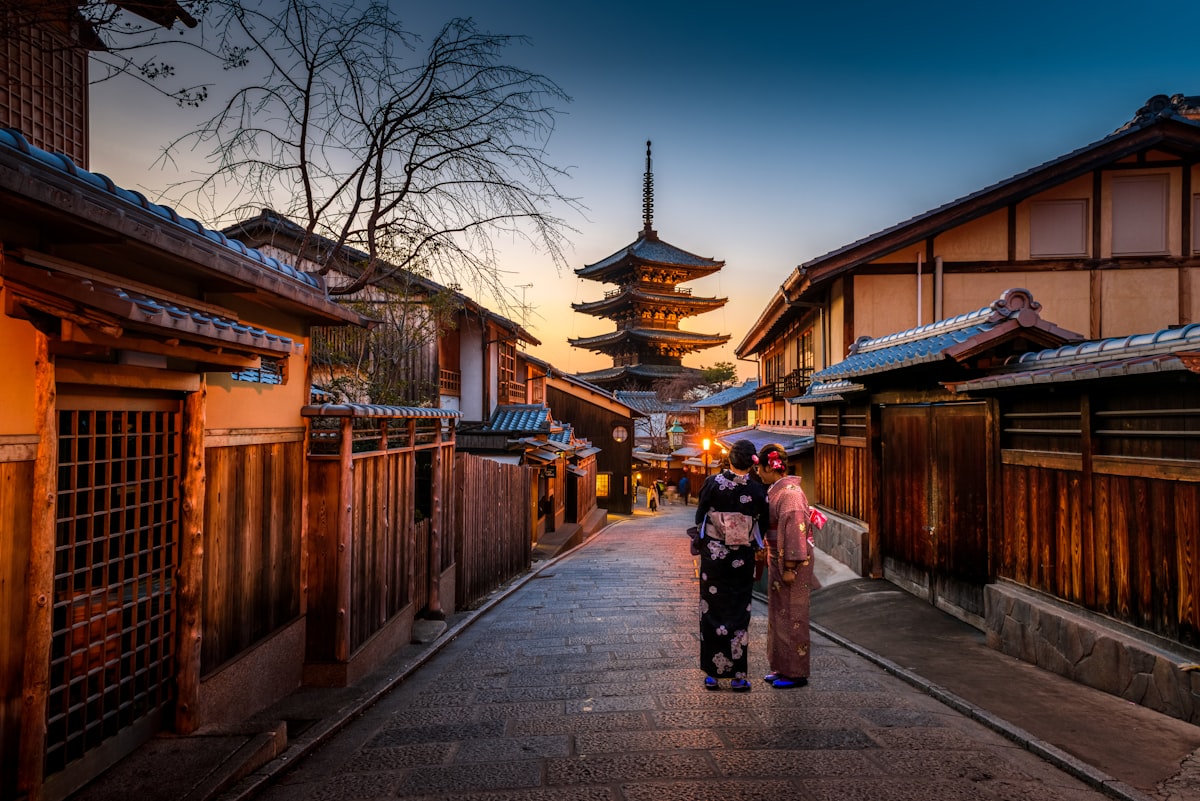
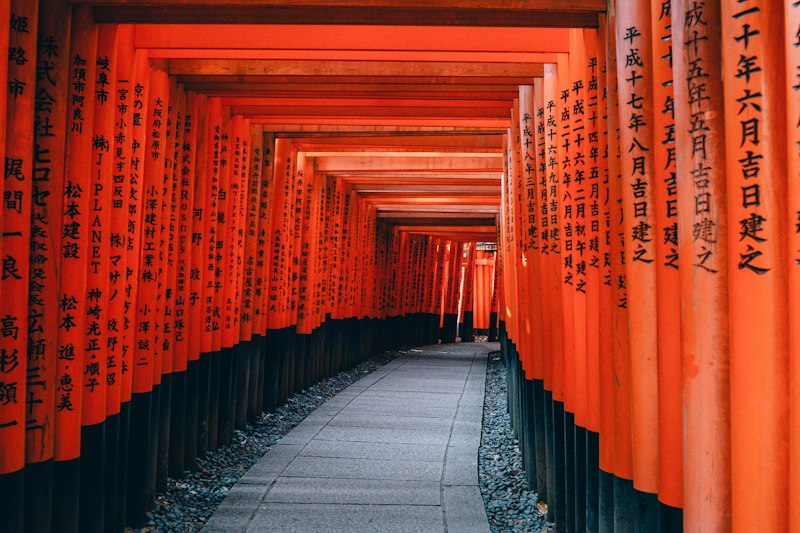
For the definitive panoramic vista of the village, the Ogimachi Castle Observation Deck is unparalleled. From this elevated vantage point, the thatched-roof houses appear like a miniature fairytale kingdom nestled in a verdant valley. During winter, the illumination events transform the scene into a glowing constellation of amber lights against a sapphire night sky. It is a moment of pure, breathless awe that captures the spiritual essence of the Japanese Alps. The scale of the landscape against the delicate architecture creates a visual harmony that stays with you long after you descend.
Wada House (Wada-ke)
Step inside the largest and most prestigious Gassho-zukuri farmhouse in the village. The Wada House is a living museum where the tactile history of the silk industry comes alive. Touch the soot-darkened timber beams, lashed together with sturdy ropes rather than nails, and feel the radiant warmth of the irori (sunken hearth). The upper floors reveal the intricate lattice-work of the roof's interior, showcasing the sheer engineering brilliance required to survive Gifu’s brutal winters. It is an intimate encounter with the domestic soul of the village, smelling of aged wood and history.
Myozenji Temple & Museum
Myozenji is a rare architectural marvel, featuring a thatched-roof bell tower gate and a main hall that seamlessly blends Buddhist sanctity with the village's signature farmhouse style. The temple serves as a spiritual anchor for the community. Inside, the museum displays traditional tools and artifacts that illustrate the rigorous daily life of the monks and villagers. The contrast between the heavy, protective thatch and the delicate interior carvings creates a unique aesthetic tension. It is a place of quiet reflection, where the sound of the temple bell echoes through the mountain silence.
Local Soul Food
Tastes you can't find anywhere else.

Hida Beef Hoba Miso
Indulge in the buttery melt of premium Hida beef, sizzled atop a dried magnolia leaf. The beef is slathered in a rich, savory miso paste mixed with local mushrooms and leeks. As the leaf heats over a small charcoal brazier, it imparts a subtle, earthy fragrance to the marbled meat, creating a symphony of umami that defines the Gifu culinary experience.
Handmade Sarashina Soba
Experience the clean, nutty snap of chilled soba noodles crafted from the village's pristine mountain spring water. These buckwheat noodles are served with a delicate dashi dipping sauce and freshly grated wasabi. The texture is firm and refreshing, providing a perfect palate cleanser that highlights the purity of the local agricultural traditions.
Gohei Mochi
A beloved local street snack, these pounded rice cakes are skewered and grilled over an open flame until the edges are perfectly charred and crispy. Coated in a thick glaze of walnut, sesame, and miso, each bite offers a delightful contrast between the chewy interior and the sweet-savory crust. It is the ultimate comfort food for a chilly mountain stroll.
Premium Stays
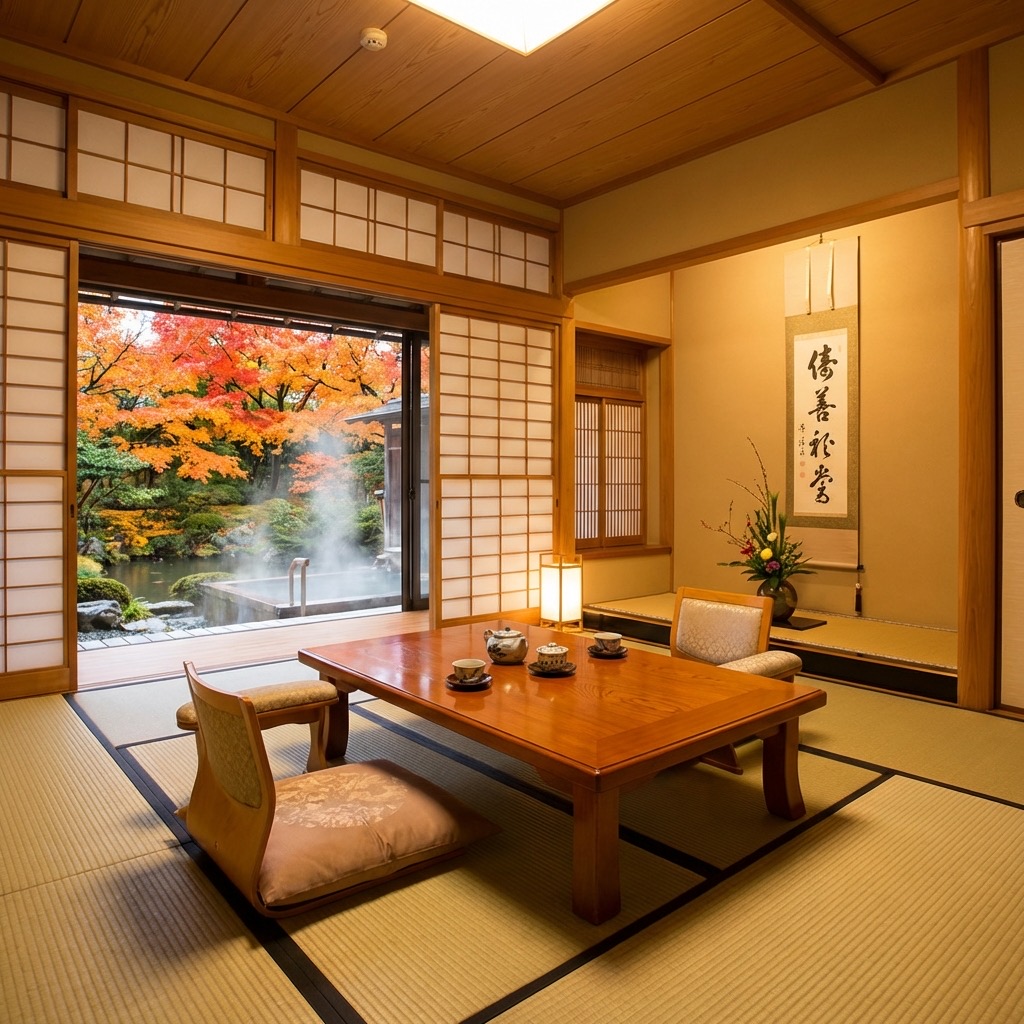
For a truly transformative experience, staying within a traditional Gassho-zukuri farmhouse in the Ogimachi district is essential. This allows you to experience the village after the day-trippers depart, when the mist settles and the only sound is the rushing river.
Getting There
The most efficient route is via the Nohi Bus from Takayama Station (50 mins) or Kanazawa Station (75 mins). Reservations are mandatory for most peak-time buses. During winter, expect delays due to heavy snow; always check the Nohi Bus website 24 hours before departure.
FAQ
Inspired?
Share this destiny with someone special.