The Truth About Japan’s Barrier-Free Maze
I remember my first trip to Tokyo with my 72-year-old mother and my three-year-old son. I thought I knew Shinjuku Station like the back of my hand because I'd visited as a solo backpacker years prior. I was wrong. When you are alone, you take the stairs and escalators without thinking. When you have a stroller and a senior who needs to avoid stairs, you realize that the 'accessible' route often adds a literal mile to your journey. I spent forty minutes just trying to find an elevator that wasn't hidden behind a construction wall or a tiny curry shop. It was exhausting, and by the time we reached the platform, everyone was cranky. The secret I learned is that you cannot rely on Google Maps alone for 'walking time' when you need elevators. You need to double that estimate. I also realized that the best way to handle the arrival day—when everyone is jet-lagged and the luggage is heavy—is to skip the trains entirely for that first leg. I now always book a private van from the airport to the hotel. It sounds like a luxury, but when you divide the cost by four people and factor in the saved stress, it’s the best money I’ve ever spent.
Top Family Choice
Klook Private Airport Transfer
The absolute best way to avoid the 'elevator hunt' at major stations on your first day. Direct door-to-door service.
Book Your Van
It allows us to arrive at the hotel with our dignity intact, rather than sweating through a crowded Ginza Line transfer with three suitcases and a crying toddler. This small change transformed our entire arrival experience from a survival mission into a pleasant sightseeing drive through the city streets.
Why Station Layouts Will Trick You
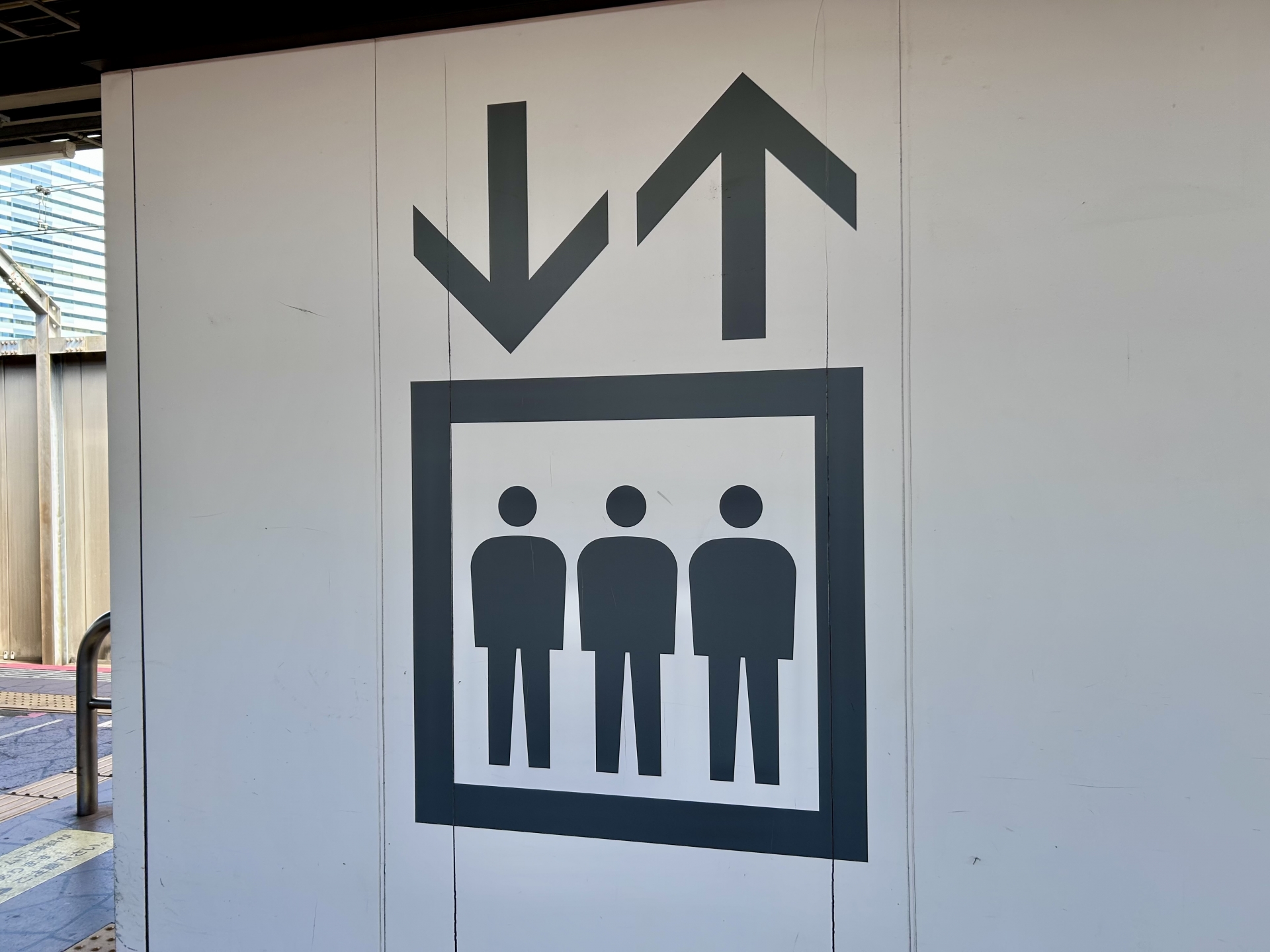
Japanese stations are vertical cities. Often, the elevator that takes you from the street to the ticket gate is on the opposite side of the building from the elevator that takes you from the gate to the platform. I’ve learned to look for the 'Universal Design' maps posted near ticket offices. These maps are much more accurate than your phone for finding the actual lift locations. Also, keep an eye out for the 'Station Staff' button on the ticket gates; the staff are incredibly helpful and will often walk you to the correct elevator if they see you struggling with a wheelchair or stroller.
My Secrets for Finding Quiet Oases
One of the biggest struggles I faced was the lack of public seating. In Japan, people don't really 'loiter,' so benches are surprisingly rare in public squares. When my mom's knees started aching in the middle of a Ginza shopping spree, we were stuck. That’s when I discovered the 'Depachika' and rooftop garden hack. Almost every major department store—like Takashimaya, Isetan, or Mitsukoshi—has a basement food hall (Depachika) and a beautiful, often free, rooftop garden. These roofs are my secret sanctuary. They usually have benches, clean restrooms, and enough space for kids to run around without bumping into a salaryman. We started planning our days around these 'Oasis' points. Instead of trying to find a crowded cafe with no space for a stroller, we’d grab some high-quality bento boxes from the basement and head to the roof for a picnic. It saved us money and gave us the quiet time we desperately needed. Choosing the right accommodation also plays a massive role in this. I used to stay right next to the busiest exits to 'save time,' but now I look for hotels that are a 5-minute walk away from the hub, preferably near a park. I spent hours filtering through reviews to find places that specifically mentioned 'spacious' rooms and 'elevator access'—things you can easily check when booking through a reliable platform.
Best for Seniors
Expedia Family-Friendly Hotels
Filter for 'Accessible' and 'Family Room' options to ensure you have the space your group needs in 2025.
Find Your Oasis
Having that extra 10 square meters of floor space for the kids to play makes a world of difference for everyone's mental health after a long day of exploring.
Shortcuts to Beating the 2025 Crowds
By 2025, overtourism in spots like Kyoto and Asakusa has reached a point where you simply cannot visit them at noon with a family. My rule now is 'The One Big Thing.' We pick one major site per day and we get there at 7:30 AM. By 10:30 AM, when the tour buses arrive and the crowd density becomes unsafe for small children or slow-moving seniors, we are already leaving. We spend our afternoons in 'Tier 2' neighborhoods like Yanaka or Setagaya, where the streets are wider and the pace is much more manageable. I’ve also become a huge fan of the 'Taxi Shortcut.' In many cities, taking two taxis for a group of five is actually comparable in price to five individual subway tickets, and it drops you exactly where you need to be. No stairs, no transfers, no crowds. For a family, this isn't just a shortcut; it's a survival tactic. I also highly recommend using the 'Japan Transit by Jorudan' app, which has a specific 'wheelchair-friendly' search filter that omits stations with known accessibility gaps. This app was a lifesaver when we were trying to find a way home from a remote temple without having to carry a sleeping toddler up three flights of stairs.
| Activity | Peak Crowd Time | Savvy Alternative |
|---|---|---|
| Senso-ji Temple | 11:00 AM - 4:00 PM | Visit at 7:00 AM or 9:00 PM |
| Shibuya Crossing | 5:00 PM - 8:00 PM | View from Mag's Park Rooftop |
| Nishiki Market | 12:00 PM - 3:00 PM | Local supermarkets (Seijo Ishii) |