The Elevator Scavenger Hunt
I’ll never forget my first day in Tokyo. I was literally sweating at the bottom of a 50-step staircase with a sleeping toddler in a heavy stroller and felt completely defeated. Back home, I took ramps for granted, but in Japan, finding an elevator is often like a high-stakes scavenger hunt. Most stations are multi-level mazes, and the elevator might be tucked behind a convenience store or located at the far end of a platform. I quickly learned that the 'Universal Design' signs are your best friend, but they don't always point to the most logical path. In 2025, many stations have added more elevators, but they are often small—fitting only one stroller and one other person—which leads to long wait times during peak hours. My secret? I started using the 'Station Map' feature on my navigation apps religiously. It tells you exactly which car is closest to the elevator. If you’re coming from the airport with kids and gear, don't even try the subway first. I highly recommend booking a private transfer or a specialized airport shuttle to get you to your hotel without the initial 'stair-climb' trauma
Mom's Choice
Klook Airport Private Transfer
Avoid the stairs and crowds immediately after a long flight. It's a game-changer for families with toddlers.
Book Your Stress-Free Transfer
. It saved my sanity and my back on my last trip. Trust me, the extra cost is worth every yen when you see the sea of commuters you'd otherwise have to fight through with a stroller and three suitcases.
The 'Yellow Sign' Shortcut
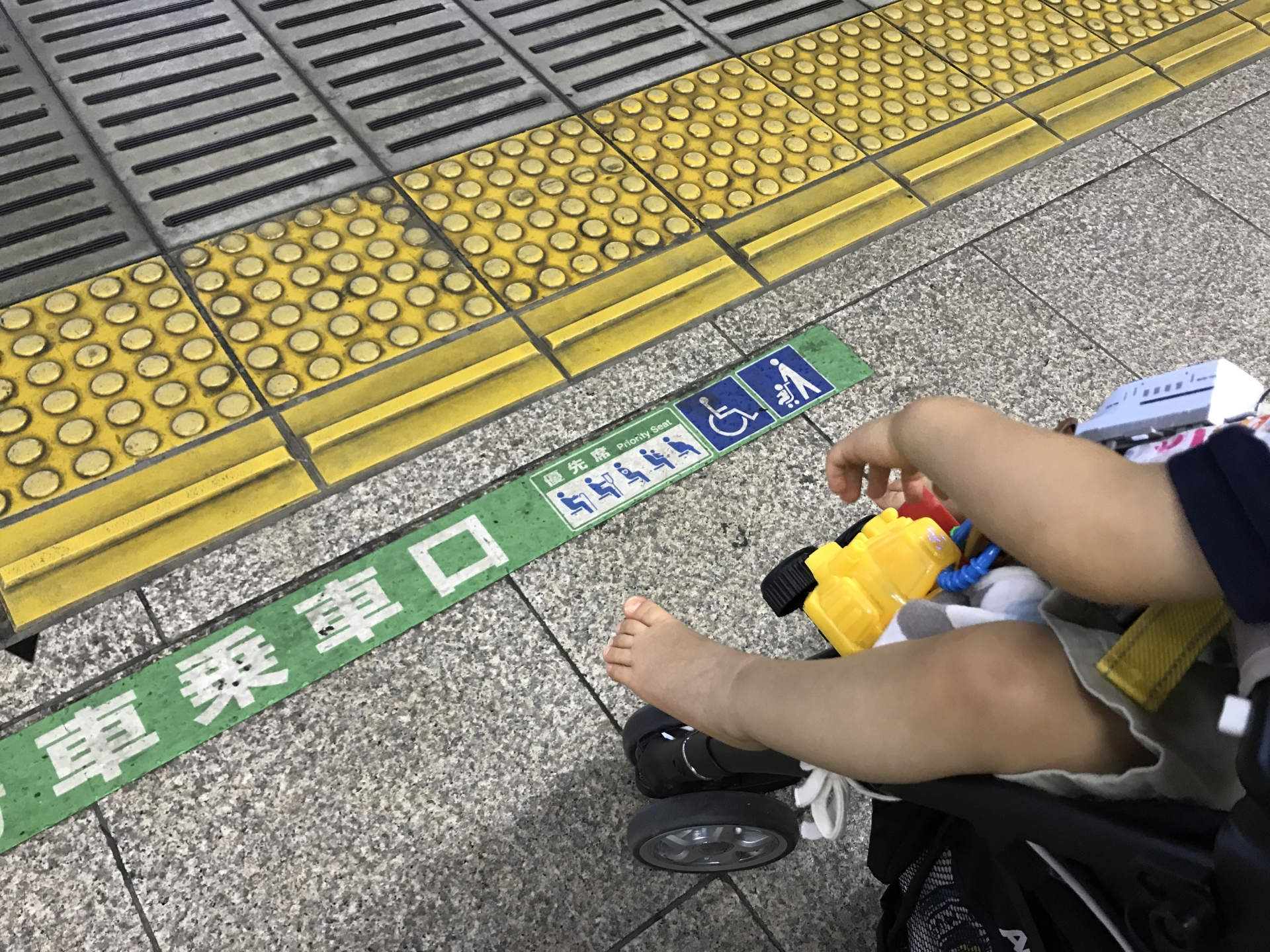
Look for the bright yellow signs on the platform floor. They usually indicate where the elevator-accessible cars will stop. If you stand anywhere else, you might find yourself trapped behind a sea of commuters when the doors open, making it impossible to reach the exit. Also, download the 'Japan Transit' app by Jorudan; it has a specific filter for 'elevator-only' routes that is much more reliable than standard maps.
The Truth About Bus and Train Etiquette
One thing I had to get used to was the 'stroller glares.' It’s not that Japanese people don't like children—they do!—but the physical space on a Kyoto city bus or a Tokyo subway during rush hour is non-existent. I once tried to board a bus in Kyoto with my stroller unfolded, and the look of sheer panic on the driver's face told me everything. In Japan, the cultural expectation is that you fold your stroller on crowded transport to make room for others. This is why I tell everyone: leave the massive jogging stroller at home. You need something that folds with one hand while you hold a squirming child in the other. I also realized that traveling between 7:30 AM and 9:00 AM is a recipe for disaster. The 'Salaryman' rush is real, and a stroller in that environment is basically a battering ram. Instead, I planned my 'big moves' for the mid-morning. To make things even easier, I started booking hotels that were directly connected to major hubs or within a 2-minute walk of a station with a known elevator exit. I found some of the best family-friendly spots by filtering for 'accessibility' and 'family rooms' on Expedia
Best Value
Family-Friendly Hotel Search
Find hotels with elevators and larger rooms that actually fit a crib and a stroller.
Find Family Hotels
. It makes a world of difference when you don't have to navigate a kilometer of cobblestones just to get to your lobby. Another life-saver is the 'Takkyubin' luggage forwarding service. Send your big bags from the airport to your hotel for about 2000 yen, and suddenly you only have to worry about the stroller.
The 'Babycal' Rental Shortcut
By 2025, the 'Babycal' service has become a total lifesaver for me. Instead of hauling my own stroller across the country on the Shinkansen, I started renting them at major stations. It's a genius system where you reserve a high-quality stroller via an app and pick it up at a kiosk. This allowed me to use a baby carrier for the transit parts (which is much easier on stairs) and then have a stroller ready for a long day of walking around Disney or Ueno Park. I also stopped trying to carry my suitcases and the stroller at the same time. The 'Hands-Free Travel' counters at airports and stations will ship your bags to your hotel for a very reasonable price—usually around the cost of a couple of coffees. This meant I could focus entirely on getting the stroller through the crowds without looking like a pack mule. Trust me, your stress levels will drop by 80% the moment you aren't tethered to a 20kg suitcase. Also, keep an eye out for 'Mamaro' pods—these are private, tiny nursing and changing rooms found in malls and some stations that are absolute sanctuaries for parents.
| Transport Mode | Stroller Strategy |
|---|---|
| Shinkansen | Book the 'oversized luggage' seat to keep stroller behind you. |
| City Bus | MUST fold. Narrow aisles make unfolding impossible. |
| Subway | Stay in the 'Wheelchair/Stroller' designated areas in the first/last cars. |
| Taxis | Most 'Japan Taxis' (the tall black ones) fit an unfolded stroller. |
| Escalators | Strictly forbidden with strollers. Always find the elevator. |