The 'Minpaku' Maze: Why Your Booking Might Be at Risk
I remember the first time I booked a cute little machiya in Kyoto, only to have it canceled 48 hours before my flight. Why? The host didn't have a valid license. In 2026, Japan's 'Minpaku' (private lodging) laws are even tighter than before. Most residential areas only allow rentals for 180 days a year, and many municipalities have added their own layers of complexity. For example, some wards in Tokyo like Shinjuku and Shibuya only allow rentals on weekends in certain zones, which is a total nightmare for a ten-day vacationer. I’ve learned the hard way that if a price looks too good to be true, it’s probably because the host is skirting the law. I now prioritize listings that clearly display their license number in the description. If I can't find it, I move on. To avoid the stress of a last-minute cancellation, I often cross-reference my stays with verified hotel platforms. I’ve found that booking a flexible 'back-up' hotel can be a lifesaver.
Safety First
Expedia Hotel Search
I use this to find 'Apart-hotels' which are the safest alternative to Airbnb in Japan right now.
Find Legal Stays
This gives me the security I need while I hunt for that perfect local vibe. Plus, with the 2025 updates, local councils are much more aggressive about shutting down 'ghost' listings that don't meet fire safety standards. It's not just about the law; it's about your safety in a country prone to earthquakes where proper building codes are non-negotiable.
How I Spot a Legal Listing in Seconds
The gold standard is the 'License Number' or 'Notification Number' (usually starting with an 'M'). If a host is legitimate, they will proudly display this in the 'About this space' section. I also look at the check-in process. Since 2025, the law requires strict identity verification, often involving a tablet or a face-to-face meeting. If a host tells you to 'find the key under the flowerpot' and avoid the neighbors, they are likely operating illegally. I’ve had to explain to many fellow travelers that 'staying under the radar' isn't just a quirk—it's a sign you could be kicked out mid-trip if a neighbor reports the unit. Trust me, the awkwardness of being questioned by a Japanese building manager is not how you want to spend your Tokyo nights.
The Rise of Apart-Hotels: My Secret to Stress-Free Stays
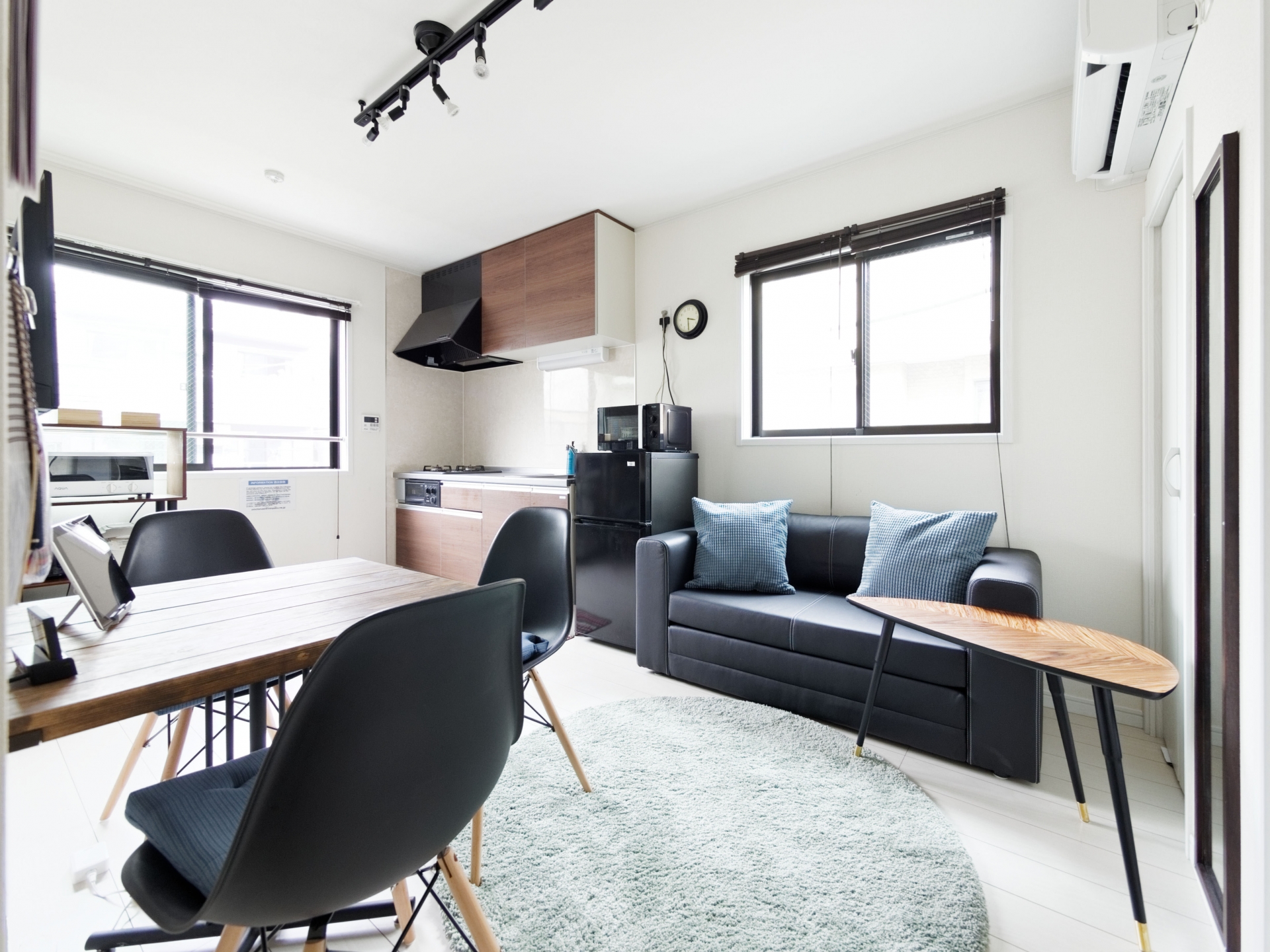
By mid-2025, I noticed a huge shift in the market. Since traditional Airbnbs became such a headache, 'apart-hotels' have exploded in popularity across Tokyo and Osaka. These are professionally managed buildings that feel like an apartment—complete with a kitchen and laundry—but operate with a full hotel license. This means no 180-day limit and no 'ghosting' hosts. I personally love brands like Mimaru or Tokyu Stay. They give me that 'living like a local' feeling without the anxiety of wondering if the police are going to knock on the door because of a noise complaint from a neighbor. When I’m planning a multi-city trip, I usually bundle my apart-hotel stays with local experiences to keep things simple. For instance, I always make sure my transport is sorted before I even land, usually by grabbing a digital transit pass or a regional rail ticket.
Traveler's Choice
Klook Japan Travel Essentials
The easiest way to book your JR Pass or pocket WiFi so you can find your rental easily.
Book Essentials
This way, even if I'm staying in a residential neighborhood, I know exactly how to get back to my home base without getting lost in the maze of suburban streets. These apart-hotels also offer something Airbnbs rarely do: luggage storage. Being able to drop your bags at a front desk at 10 AM instead of dragging them through Shinjuku Station is a total game-changer.
Airbnb vs. Hotels: The 2026 Comparison
Choosing where to sleep in Japan isn't just about the bed anymore; it's about the legal security and the neighborhood impact. Overtourism has made locals in places like Kyoto and Kamakura very sensitive to 'tourist noise.' I’ve found that staying in a hotel or a licensed apart-hotel actually makes me feel more welcome. You’re contributing to the local economy in a regulated way, and the staff can help you with things like 'Takkyubin' (luggage forwarding), which most Airbnb hosts won't touch. Here’s a quick breakdown of how I decide where to stay based on the current 2026 climate. While Airbnbs can be great for large groups, the risk of a last-minute cancellation due to local ward crackdowns is higher than ever. Business hotels, on the other hand, are incredibly reliable and often located right on top of major transit hubs, saving you hours of walking time.
| Feature | Licensed Airbnb | Apart-Hotel | Business Hotel |
|---|---|---|---|
| Legality | 180-day limit applies | Fully licensed 365 days | Fully licensed 365 days |
| Space | Large, often multi-room | Spacious with kitchen | Compact and efficient |
| Check-in | Self or remote tablet | Front desk / Kiosk | Front desk |
| Price | Varies (approx. 15,000 yen+) | Mid-range (approx. 20,000 yen+) | Budget (approx. 8,000-12,000 yen) |