The Moment I Realized Food is a Contact Sport
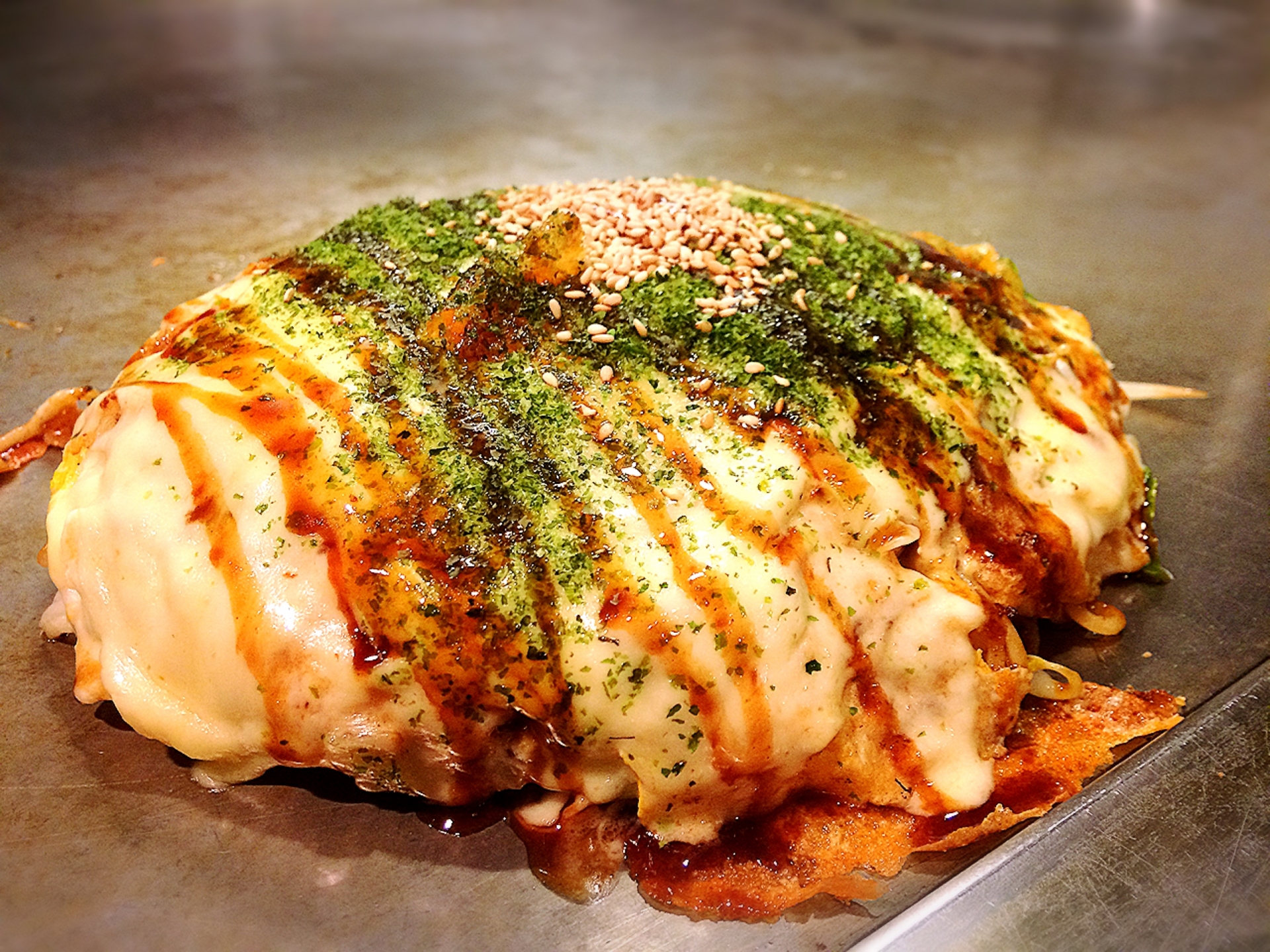
I remember sitting in front of my first scorching teppan in a cramped Osaka alleyway back in 2019, sweating through my shirt and feeling completely out of my depth. I’d been in Japan for six months, but I still didn't know the difference between 'Kansai-style' and 'Hiroshima-style.' The chef just handed me a bowl of raw batter and a pair of metal spatulas with a wink. My friend and I stared at the bowl like it was an unexploded bomb. I tried to flip the pancake way too early, and half of it ended up as a charred smear across the grill while the other half stayed stubbornly raw. The table of salarymen next to us actually cheered when I finally managed to scrape it together. That’s the thing about okonomiyaki—it’s not about perfection; it’s about the chaos. It’s noisy, it’s hot, and by the end of the night, you’ll smell like a smoky cabbage patch in the best way possible. nnSeriously. Don't wear your nice clothes. nnFast forward to 2026, and I still think this is the most underrated 'must-do' for anyone visiting. Unlike a fancy sushi dinner where you feel like you have to whisper, an okonomiyaki or monjayaki session is loud and interactive. You aren't just a customer; you're the line cook. If you want to dive into this without the fear of burning the house down, booking a guided workshop is a total game-changer
Top Rated
Book an Osaka Cooking Class
A hands-on workshop in the heart of Namba where a local pro teaches you the secret ratio of flour to cabbage for the fluffiest pancake possible. You'll learn the 'double-spatula' flip that usually takes years to master.
The 'pro-flip' technique is impossible to learn from a YouTube video—you need a sensei to guide your hands.
Book Your Grill ↗
. It takes the 'oh god, am I doing this right?' anxiety out of the equation. I’ve seen families who were barely speaking to each other at the start of the meal suddenly bond over the high-stakes drama of a communal flip. It’s visceral, it’s messy, and it’s one of the few times in Japan where it’s perfectly okay to make a total fool of yourself in public. On top of that, the flavor of a pancake you actually fought to cook tastes ten times better than one served on a plate. You'll want to focus on the 'clack-clack' sound of the spatulas—it's the soundtrack of a real Osaka night. Most people miss the fact that the sauce is the secret; that thick, sweet Otafuku glaze caramelizing on the hot iron is a smell you'll never forget. Just don't be afraid to fail. My first one was a disaster, and it's still one of my favorite memories.
If you're in Osaka, look for shops with 'Mizuno' or 'Chibo' in the name for a classic feel, but the real gems are the tiny places with only three tables—they're more likely to let you experiment with your own toppings.
The 'Sticky Puddle' vs. The 'Savory Pancake'
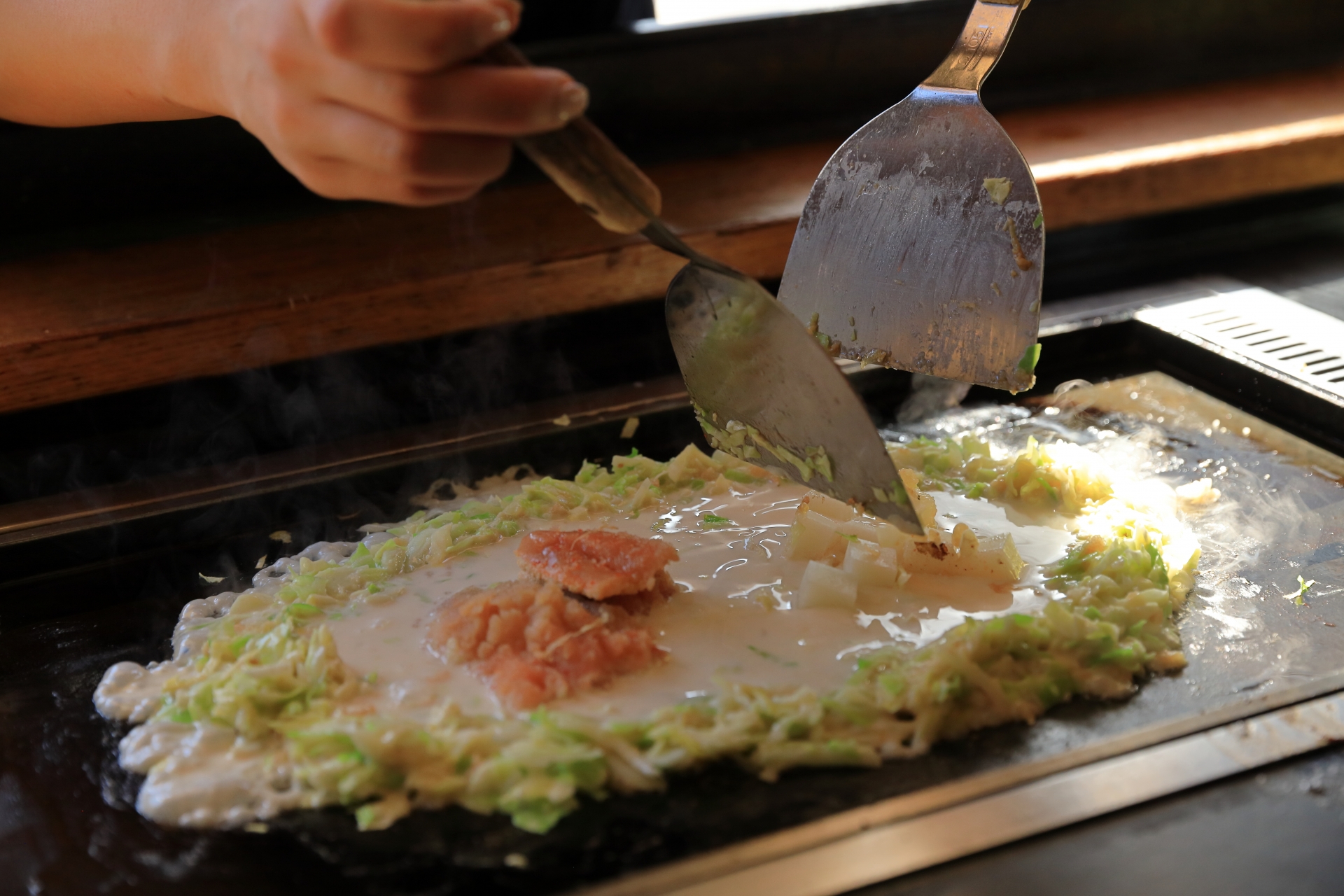
Look, I’ll be honest: the first time you see Monjayaki, you’re going to think someone made a mistake in the kitchen. If Okonomiyaki is a sturdy, reliable pancake, Monjayaki is its weird, liquid cousin from Tokyo. I used to hate it. My first time in Tsukishima (Tokyo's 'Monja Street'), I thought the waiter had served me a bowl of literal soup. It’s runny, it’s gooey, and you eat it with a tiny spatula the size of a postage stamp. But then I learned the 'doughnut' technique. You fry the cabbage and meat first, form a ring (the 'bank'), and pour the liquid batter into the middle. It’s like building a delicious dam. nnIt’s a mess. But it’s a delicious mess. nnThe magic happens when the bottom gets crispy and caramelized. You scrape a tiny bit off with your spatula, press it against the hot grill to get that 'yakime' (char), and eat it right off the metal. It’s addictive. I made the rookie mistake of trying to eat it like a normal meal with chopsticks—don't do that. You’ll look like a tourist who didn't read the manual. Use the tiny spatula! Also, be warned: your clothes will smell like ginger and pork for at least two days. I once wore a dry-clean-only wool coat to a monja shop in January. Big mistake. Huge. Now, I always carry a plastic bag to stuff my jacket into while I cook. Most modern shops provide these, but the old-school ones? You’re on your own. If you're staying in a place like the ones near Tsukishima, you can literally walk back and jump straight into a shower
Local Vibe
Stay Near Monja Street
Tsukishima is a quiet, traditional island in Tokyo Bay. Staying here means you're steps away from over 70 monjayaki shops and the scenic riverfront. It's a peaceful escape from the Shinjuku neon.
Avoid the 'smoky clothes' train ride back to your hotel by staying within walking distance of the best grills.
Find Nearby Hotels ↗
. Trust me, you'll need it. Oh, and here's the thing: Monjayaki is a social snack, not a heavy meal. It's meant to be picked at while you drink and talk. If you're looking for a filling dinner, stick to the Osaka style. But if you want the true Tokyo experience, you have to embrace the puddle. The texture is polarizing, but once you get that first crispy bite, you'll understand why locals have been obsessed with it since the Edo period.
The 'burnt bits' (okage) at the bottom of the monjayaki are the best part. Don't let the staff scrape them away—fight for them!
Practical Advice for the Grill-Curious
So, how do you actually do this without ending up in the burn unit? First, decide on your vibe. Osaka is for the bold, thick, filling pancakes. Tokyo is for the snacky, social, lingering Monjayaki. If you can, do both. Most 'experience' bookings last about 90 minutes, which is plenty of time to cook two different styles and have a few drinks. Speaking of drinks, okonomiyaki is meant to be eaten with a cold 'Nama Biru' (draft beer) or a highball. The carbonation cuts through the heavy mayo and sweet sauce perfectly. nnDon't overthink the technique. nnIf you’re worried about the language barrier, don't be. Most DIY spots in 2026 have tablets with English menus or laminated 'how-to' guides with pictures. But honestly? Half the fun is pointing at the table next to you and gesturing for help. The staff love showing off their flipping skills. I once had an elderly lady at the next table take the spatulas out of my hands because she couldn't stand watching my 'pathetic' technique. She made the best okonomiyaki I’ve ever tasted, then went back to her beer without saying a word. That’s the Japan I love. Prices are usually very reasonable—you’re looking at around 4,500 yen per person including a drink. It’s one of the best value-for-money nights out you can have in the big cities. Just remember: the grill is hot. Like, 'singe your arm hair' hot. Keep your phone and your fingers at a safe distance. You should also keep an eye on the 'Aonori' (seaweed flakes). They look great on the food but they are magnets for your front teeth. Check a mirror before you head out for drinks afterward. I've spent many nights walking around Dotonbori with a green tooth, wondering why people were smiling at me. It's all part of the charm. Just dive in, get messy, and enjoy the fact that you're actually participating in the culture rather than just watching it through a window.
Always ask for 'Aonori' (seaweed flakes) and 'Katsuobushi' (bonito flakes). The way the bonito flakes 'dance' in the heat makes for a great slow-mo video!