The Moment I Realized I Was Doing It All Wrong
I remember sitting on a slightly-too-cold tatami mat in 2022, sweat literally dripping down my neck because I was terrified of offending a 70-year-old woman with a pair of heavy brass shears. I’d walked into this Kyoto studio thinking Ikebana was just 'putting flowers in a vase.' I mean, how hard could it be, right? I’ve bought grocery store bouquets before. But boy, was I wrong. Within five minutes, I realized it’s more like floral architecture mixed with a therapy session you didn't realize you needed. I spent forty minutes staring at a single branch of plum blossom. Forty minutes! In any other context, that’s a psychiatric evaluation. But here? That’s 'finding the soul of the plant.' My sensei, a woman who looked like she could prune a hedge with a single stern look, just watched me. Every time I reached for a second flower, she’d gently shake her head. nnI realized that my Western brain was hardwired to fill space—more flowers, more color, more noise. Ikebana taught me that the empty space, or 'ma,' is actually the most important part of the whole thing. It’s about subtraction, not addition. By the time I finished my first arrangement, I wasn't just looking at flowers; I was looking at a tiny, controlled version of the universe. It’s one of the few times in my five years living here that I’ve actually felt that 'Zen' everyone keeps selling in the travel brochures. It’s quiet, it’s focused, and it’s surprisingly physical. If you’re looking to actually slow down and stop checking your phone for an hour, this is the one.
Top Rated
Book an Authentic Ikebana Class
Join a master instructor in a traditional Kyoto townhouse. You'll learn the 'Moribana' style, handle professional tools, and create your own seasonal arrangement from scratch.
Classes are kept small (often 4-6 people) and sell out weeks in advance in 2026.
Book Now ↗
I honestly felt like I’d run a marathon by the end, even though I’d barely moved. My brain was just... quiet. For the first time in months, I wasn't thinking about my 2026 deadlines or the crowded trains. I was just thinking about the angle of a willow branch. nnOn top of that, the atmosphere of a real Kyoto machiya (townhouse) changes the way you breathe. You can smell the old wood, the damp earth from the garden, and the faint scent of green tea. It’s not a performance; it’s a discipline. I’ve seen tourists walk in loud and leave whispering. There’s something about the weight of those shears—they aren't like the flimsy plastic ones you use at home. They have heft. They demand respect. When you finally make that first cut, the sound of the stem snapping in the silent room is like a gunshot. It’s intimidating at first, but then it becomes addictive. You start to see the potential in every crooked twig. You stop looking for the 'perfect' rose and start looking for the branch with the most interesting character. That shift in perspective is worth the price of the class alone. Seriously. Just go.
Don't wear tight jeans. You'll likely be sitting on the floor (seiza style) or on a low stool, and you want your blood to actually reach your legs. Trust me, pins and needles are the enemy of artistic focus.
What You Need to Know Before You Snip
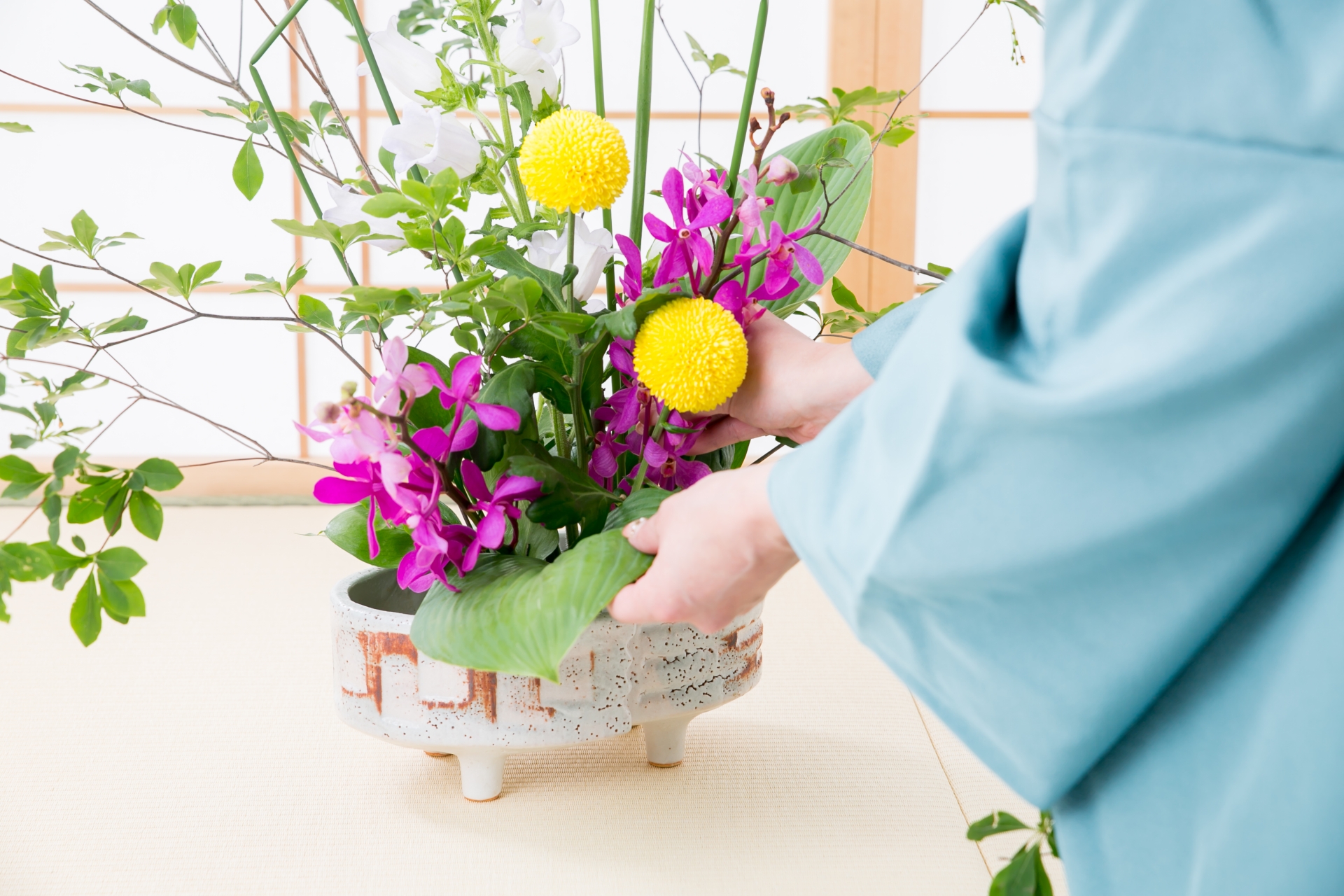
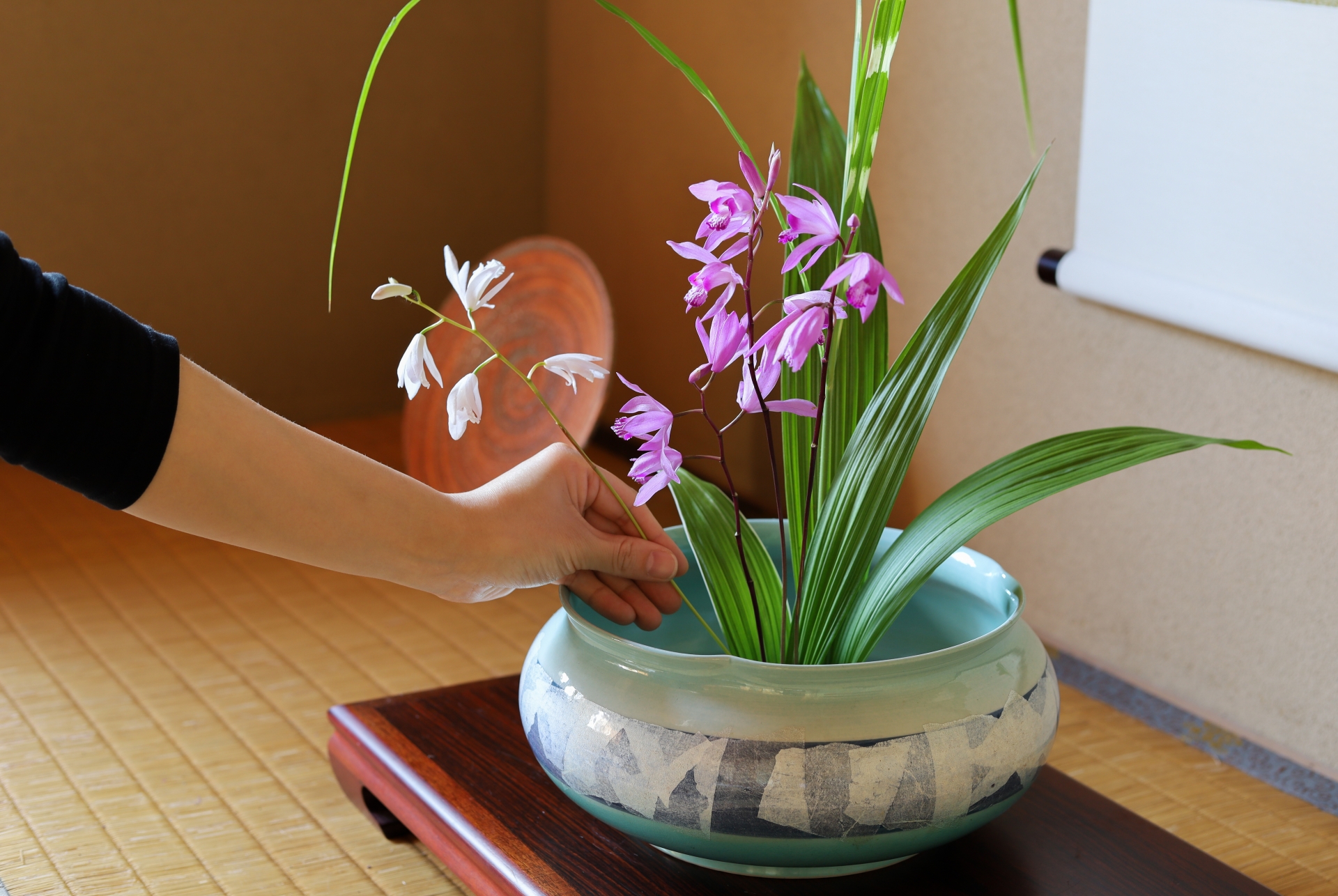
Let’s talk about the 'Kenzan.' It’s basically a heavy lead plate with hundreds of sharp brass needles. If you drop it on your toe, your vacation is over. I nearly did. You have to jam those stems onto the needles with some serious authority. If they lean even a fraction, the whole thing looks like a wilted salad rather than a masterpiece. The biggest mistake I made—and you probably will too—is being too timid. You think you’re going to hurt the plant, but you have to be firm. I also learned the hard way that once you cut a stem, there’s no 'undo' button. I snipped a gorgeous lily about two inches too short, and the silence in the room was deafening. My sensei didn't say anything, but her sigh spoke volumes. nnMost classes will teach you the 'Moribana' style first, which uses a flat dish. You’ll learn the three main lines: Shin (Heaven), Soe (Man), and Hikae (Earth). It sounds mystical, but it’s actually a very practical geometric formula. If you follow the angles, it works. If you try to be 'creative' before you know the rules, it looks like a mess. I’ve seen people try to ignore the sensei and do their own thing, and honestly? It never looks as good. Just surrender to the process. If you’re staying in a traditional area like Gion, the atmosphere of the wooden buildings just adds to the weight of the experience.
Local Favorite
Stay in Gion, Kyoto
To get the full experience, stay in a converted machiya. You'll be walking distance to the best flower studios and can see professional arrangements in every shop window.
Nothing beats waking up in a wooden townhouse before the crowds hit the Gion streets.
Find Machiyas ↗
You’ll find that the light hitting your arrangement through a paper screen (shoji) makes it look ten times better than it would in a modern hotel room. It’s all about the context. nnOh, and here's the thing: don't be surprised if the sensei 'adjusts' your work at the end. They aren't erasing your work; they're showing you what you almost achieved. It’s an ego-bruising but necessary part of the learning curve. I remember watching my sensei move one single leaf by about half an inch. Suddenly, the whole arrangement went from 'okay' to 'breathtaking.' It was infuriating and brilliant at the same time. You realize that Ikebana isn't about you; it's about the flowers. You are just the architect helping them find their best angle. And here's what most people miss: the water. The way the water reflects the stems in the shallow bowl is part of the art. You have to keep it clean, keep it clear. It’s a lesson in maintenance as much as creation. By the time you're done, you'll have a new appreciation for the 'face' of a flower. Yes, they have faces. Your sensei will make you find them. It sounds crazy until you see it.
If your stem is too thin to stay on the Kenzan needles, ask for a 'shim'—usually a scrap piece of a thicker stem you can wrap around the base to give it some bulk.
The Practical Stuff: Booking and Logistics
Don't just walk into a flower shop and expect a lesson. You need to book a proper 'taiken' (experience). In 2026, these are more popular than ever because people are tired of the 'hit-and-run' style of tourism. Most classes in Tokyo or Kyoto last about 60 to 90 minutes. I personally prefer the smaller 'machiya' (townhouse) studios in Kyoto because the lighting is better for photos and the history is baked into the walls. Prices usually hover around 4,000 to 8,000 yen. This usually includes the flower materials, which you can often take back to your hotel (though good luck getting them through customs if you're flying out the next day). nnIf you’re worried about the language barrier, don't be. Most instructors who cater to international travelers have surprisingly good English, or at the very least, they are masters of the 'demonstrate and point' method. Honestly, 90% of the teaching is done through gestures and those slightly disappointed sighs I mentioned earlier. You don't need to be a botanist. You just need to be able to follow instructions and not stab yourself with the Kenzan. I’ve seen families do this together, and it’s hilarious to see who has the most 'chill'—usually the kids, surprisingly. The adults are always too stressed about making it perfect for Instagram. nnMy advice? Forget the camera until the very end. Focus on the stems. The flowers are alive, and they move, and they have 'faces.' It sounds crazy until you’re three inches away from a chrysanthemum and you realize, 'Oh, wait, it *is* looking that way.' In 2026, the 'slow travel' trend is huge, so these spots fill up fast. I’d suggest booking at least 3-4 weeks out, especially if you want a class with English support in Kyoto. If you're in Tokyo, head to the Yanaka district. It’s one of the few places that survived the wars and has that old-school, 'shitamachi' vibe that makes Ikebana feel authentic rather than a tourist performance. You'll thank me later when you're walking through those quiet streets with your wrapped flowers, feeling like a local. It’s a far cry from the neon chaos of Shibuya, and honestly, it’s exactly what your brain needs after a few days of heavy sightseeing.
Look for classes in the Yanaka district if you're in Tokyo. It’s one of the few places that survived the wars and has that old-school, 'shitamachi' vibe that makes Ikebana feel authentic rather than a tourist performance.