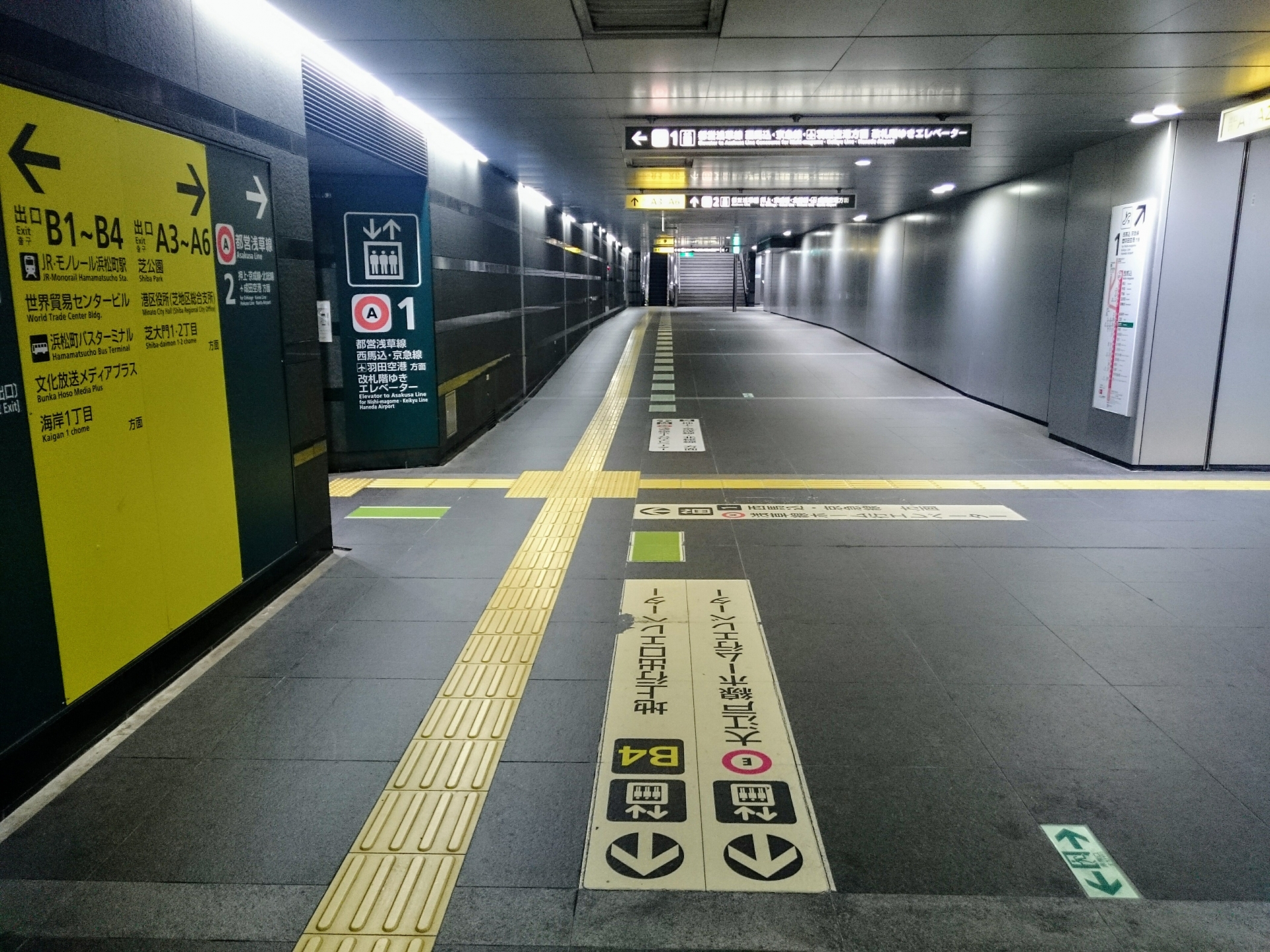
The Visual Wall: Why Your Brain Freezes in Tokyo Stations
I still remember my first time standing in the middle of Shinjuku Station. It felt like being trapped inside a giant, neon-lit pinball machine with three million other people. Even now in 2025, with all the high-tech improvements and better English translations, the sheer volume of information is enough to make anyone's head spin. The challenge for us international travelers isn't just the language barrier—it’s the way the information is packed into every available inch of space. In many Western cities, signs are minimalist and spaced out. In Japan, every square inch of a pillar, wall, or ceiling is used to communicate something: train departure times, platform numbers, safety warnings, and a dizzying array of advertisements. This creates a 'wall of text' effect where your brain simply stops processing. I once spent twenty minutes looking for a specific JR line, only to realize I was standing directly under a massive sign for it. The problem was that the sign was surrounded by four different fonts and three bright colors that my brain had mistakenly categorized as 'noise.' To get through this, you have to realize that Japanese stations are designed for high-speed efficiency. The signs are meant to be read while moving at a brisk walk. If you stop dead in the middle of the corridor to look up, you'll likely get swept away by the crowd. The trick is to find a 'safe zone'—usually near a pillar or a wall—and look for the high-contrast headers. In 2025, most major stations have upgraded to high-resolution digital screens that rotate between Japanese, English, Chinese, and Korean. If you see a sign that looks confusing, wait five seconds; it will likely flip to English. But more importantly, you need to have your logistics sorted before you even step through the ticket gates. Having a pre-booked transport pass or a reliable data connection is the only way to cross-reference the digital world with the physical chaos around you. I always tell my friends to grab their transport essentials early so they aren't fumbling with machines while the morning rush hour surge happens around them.
Travel Essential
Japan Rail Pass & Digital IC Cards
Skip the confusing ticket machines entirely. Having a pre-loaded IC card or JR Pass allows you to focus on the signs rather than the fare tables.
Check Prices on Klook
It makes a world of difference when you can just tap your phone or card and go, keeping your eyes on the overhead signs rather than digging through your wallet for coins.
My Personal Strategy for Visual Filtering
To survive the busiest hubs like Umeda or Shibuya, I developed a 'filter' that changed everything. I learned to ignore anything that wasn't on a high-contrast background. If it’s a pretty picture of a celebrity holding a beer, it’s an ad. If it’s a white sign with black text, it’s usually a safety warning. But if it’s a bright yellow box with black text, that is your lifeline. That is the way out. I also started looking at the floor more than the ceiling. In Japan, the floor is a map. There are colored lines leading you to different train lines and tactile yellow strips for the visually impaired that also serve as great 'lanes' for walking. By focusing only on the colors and the yellow exit boxes, I cut my navigation time in half. It’s about ignoring the 90% of information that doesn't apply to your immediate goal of getting from Point A to Point B.
The Secret Language of Colors and Numbers
Once you stop trying to read every word, you start to see the patterns. Japan uses a very specific color-coding system that is remarkably consistent across the entire country. Think of it as a visual alphabet. For example, the Yamanote Line (the big loop in Tokyo) is always that distinct lime green. The Chuo Line is bright orange, and the Marunouchi subway line is a deep, vibrant red. These colors are often more important than the text itself. I’ve found that even if I’m in a rush and can’t see the English text from a distance, I can just follow the 'green' path to get to my platform. However, the most critical color you need to know—the one that will save you from a breakdown—is yellow. In the Japanese station lexicon, yellow almost always signifies 'Exits' or 'Wayfinding.' If you are trying to get out of the station and back to the street level, stop looking at the colorful train line signs and start hunting for the yellow boxes. They will lead you to the 'A', 'B', or 'C' exit clusters. Each of these clusters is then numbered (like A1, B2, etc.). This is a much more reliable way to navigate than looking for 'The North Exit.' In a station like Shinjuku, there might be five different exits that could technically be called 'North.' But there is only one 'Exit A18.' Another pro-tip for 2025: look at the station numbering. Every station on a line has a letter and a number (e.g., Shinjuku on the Marunouchi line is M-08). If you know you need to go to M-12, you don't even need to know the name of the station; you just need to count four stops. This is incredibly helpful when the station names start sounding similar or when you're too tired to process kanji. The floor markings are another layer of this language. You'll see lines on the platform showing exactly where the doors will open. Often, there are different lines for 'Local' trains versus 'Express' trains. Look at the digital display on the platform, match the train type to the floor marking, and line up accordingly. It’s a silent, choreographed dance that keeps millions of people moving without colliding.
Mastering the Underground Maze and the 'Last Mile'
The underground malls in cities like Osaka (the infamous Umeda Dungeon) and Tokyo are essentially subterranean cities. I used to get so frustrated because Google Maps would lose its mind the moment I went below street level. The blue dot would bounce around, and I’d end up walking in circles. My 'pro' move now is to identify my target exit *before* I even step off the train. If your hotel or that tiny ramen shop you found on Instagram says it’s near 'Exit B5,' don't just head toward the general station area; head specifically toward the yellow signs for B5. I’ve wasted hours walking 15 minutes in the wrong direction underground because I took the 'West Gate' instead of the 'West Exit.' In Japanese stations, a 'Gate' (Kaisatsu) is where you scan your ticket, but an 'Exit' (Deguchi) is where you actually leave the building. You can go through a gate and still be a half-mile away from the exit you need. This is why I highly recommend booking your accommodation as close to a major hub as possible, but specifically looking for hotels that mention their proximity to a numbered exit. It saves you that 'last mile' of confusion when you're tired, carrying heavy luggage, and just want to shower.
Best for Logistics
Top-Rated Hotels near Major Hubs
Minimize your navigation stress by staying within a 5-minute walk of a major station exit. Look for hotels with 'Direct Access' in the description.
Find Hotels on Expedia
When you are underground and your GPS fails, look for the large yellow maps posted on the pillars. They always have a 'You Are Here' red dot. Find your exit number on that map, then look up at the ceiling for the yellow directional signs. It’s much faster than trying to recalibrate your phone's compass while standing in a stream of commuters. Also, keep an eye out for the 'Yellow Information' kiosks. Even in 2025, these are often staffed by people who can help you if you're truly stuck. Just remember to use 'Sumimasen' (Excuse me) to start the conversation. Navigating these mazes is a skill that takes a few days to master, but once it clicks, you'll feel like a local. You'll start to anticipate the turns and recognize the landmarks—like a specific bakery or a certain statue—that tell you you're on the right path. It’s all about shifting your perspective from 'I'm lost' to 'I'm just following the yellow boxes.'
| Sign Color | Meaning & Logic | Savvy Traveler Action |
|---|---|---|
| Bright Yellow | Exits and Wayfinding | Follow these to leave the station or find street access. |
| Solid Blue | Facilities & Info | Look here for restrooms, lockers, or tourist centers. |
| Green/Orange/Red | Specific Train Lines | Match the color to your transit app to find your platform. |
| Black/White | Rules & Safety | Usually contains info about smoking areas or elevator limits. |