The 2026 Digital-Analog Gap: Why Your Phone Will Lie to You
I tell every traveler: in 2026, Japan is a land of two realities. In Shibuya, your phone is a god. In the Sato-yama (hinterlands), it's a paperweight. When you enter a deep cedar forest or a narrow valley in Shikoku, GPS 'drift' can be as much as 200 meters. I’ve seen my phone tell me I arrived at my stop when I was actually still three miles away! To survive this, I’ve developed the 'Kanji-Match Protocol.' Before I even step onto the bus, I make sure my high-speed eSIM is active
Savvy Choice
Japan High-Speed Regional eSIM
I use this to pre-cache maps and run my AI translator in real-time. Without data, those local signs are just pretty patterns.
Secure My Data Link
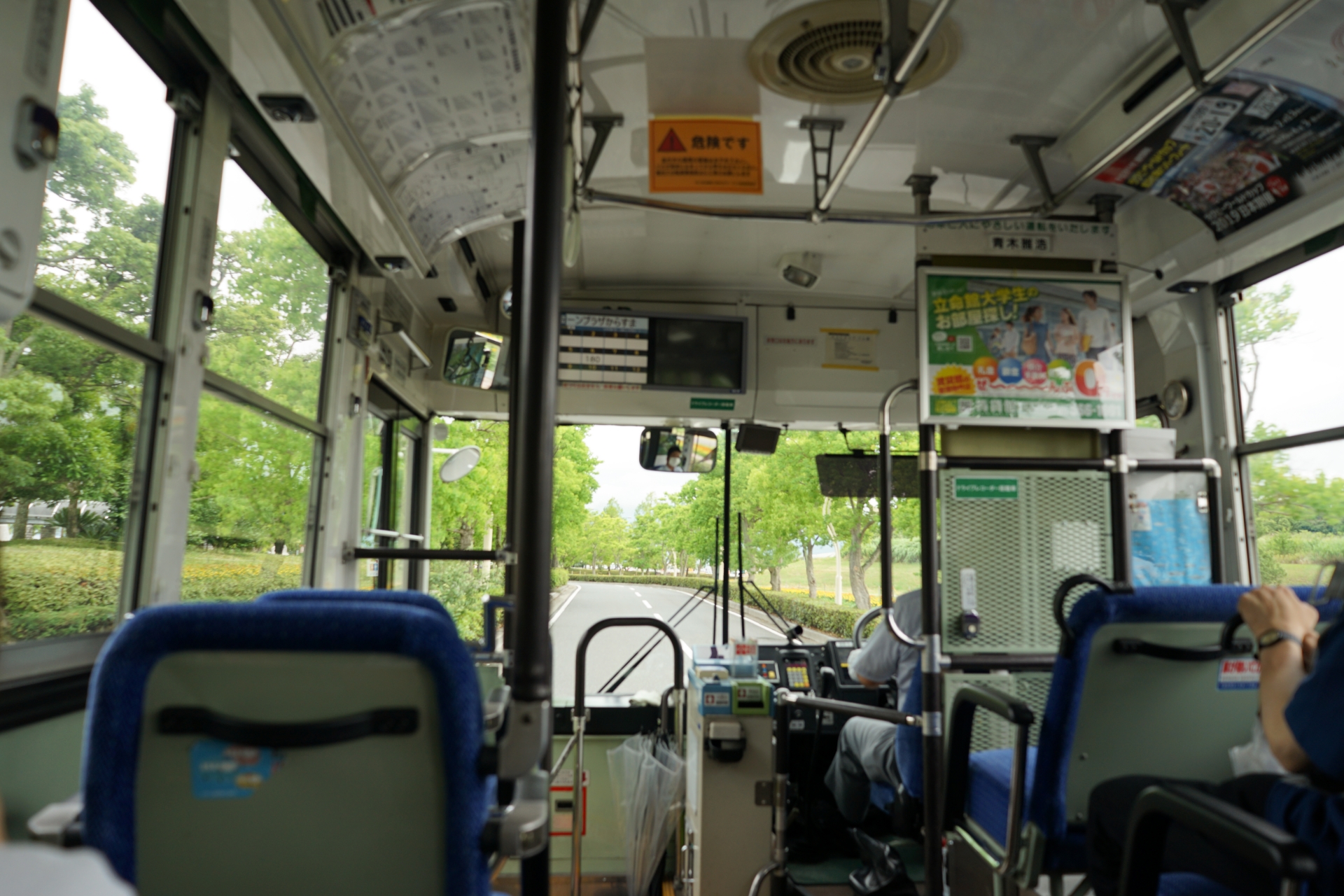
. I take a high-res screenshot of my destination's name in Japanese (like 温泉 for Onsen or 駅 for Station). As the bus moves, I ignore the speakers—which usually sound like a muffled AM radio from 1995—and I stare at the electronic ticker above the driver. I match the shapes of the characters on the screen to my screenshot. It’s a 100% reliable method that doesn't care about satellite signals. In 2026, while the buses are newer, the English support in rural prefectures is still nearly zero. Don't be a passive passenger; be an active navigator. If the 'blue dot' stops moving on your map, don't panic. Look out the window for the small, round bus stop signs and match the Kanji. It's the only way to stay on course in the silent routes of the countryside.
The 'Visual Anchor' Secret
I always sit in the very first row behind the driver. In 2026, many buses have a large digital board showing the fare and the 'Next Stop.' By sitting at the front, I can see this board clearly and cross-reference it with the physical signs we pass. If I see the same shapes on the sign and the screen, I know I'm safe. It's my 'Analog GPS'!
Driver Accountability: Making a Friend for Your Life
In 2026, rural bus drivers are used to seeing international tourists, but they are often shy about their English. This 'Polite Silence' can be dangerous if you don't know where you're going. My savvy blogger strategy is to break that silence immediately. When I board, I show the driver my destination on my phone and ask: '...ni tsuitara, oshiete kuremasu ka?' (Can you tell me when we arrive at...?). By doing this, I’ve created a psychological contract. Now, the driver feels responsible for me. I’ve had drivers in Kyushu literally point at me and wave when it was time to get off! To make this work even better, I always plan my trips around a 'Hub Hotel' located at a major station like Takayama or Morioka. I book these secure bases through Expedia
Logistics Pro
Expedia Regional Hub Hotels
I search for hotels in cities like Matsumoto or Kanazawa to be my 'Command Center' for rural bus trips. Their local knowledge is priceless.
Find My Command Center
because they often provide English-language printouts of local bus schedules that you can't find online. In 2026, missing a rural bus because of a schedule change (the '2024 Logistics Crisis' still affects frequency!) can mean a 4-hour wait in the middle of nowhere. My Hub Hotel staff can call the local bus company for me to check if the route is actually running. This human backup is your best insurance policy. Don't just trust a website; trust a person who lives there.
The 'Seiriken' Mystery: How to Pay Without the Panic
If the Kanji don't scare you, the payment system might. In 2026, many local buses in Hokkaido or the Japan Alps *still* don't take Suica or Pasmo. It’s cash or nothing! When you enter from the back door, you must take a small paper slip (Seiriken) from a machine. It will have a number on it, say '4.' Look at the board at the front. Under the number '4,' you'll see a price that goes up every few miles. When it’s your turn to get off, you pay that amount. My savvy hack? I always carry a pouch with at least 3,000 yen in 100-yen coins and 1,000-yen notes. There is a change machine near the driver, but it won't take a 5,000-yen bill! I’ve been that person frantically asking other passengers for change while the driver waited—it’s not fun. In 2026, some 'Third Sector' lines are starting to use QR codes for payment, but they often require a Japanese app. Stick to cash to be safe. I’ve put together a quick table below to help you navigate the 2026 rural transit types. My final advice: if you truly get lost and find yourself at a bus stop with no more return trips, use a translation app to find the nearest 'Chiiki Taxi' (Community Taxi). It’s the ultimate 2026 backup plan. It’s more expensive, but it beats sleeping in a bus shelter! Japan's countryside is where the soul of the country lives—don't let the fear of a silent bus keep you from seeing it.
| Bus Type | My Savvy Navigation Level | The Blogger's Truth |
|---|---|---|
| Local 'Seiriken' Bus | Expert Level Needed | Take the paper slip! Match the number on the board at the front. |
| Community 'Loop' Bus | Beginner Friendly | Usually a flat fare (¥100-200). Great for small tourist towns. |
| Mountain Trail Bus | Savvy Pro Only | GPS WILL fail here. Rely 100% on the driver and Kanji matching. |
| Station Shuttle | Easy | Often has English signs and takes Suica in 2026. |