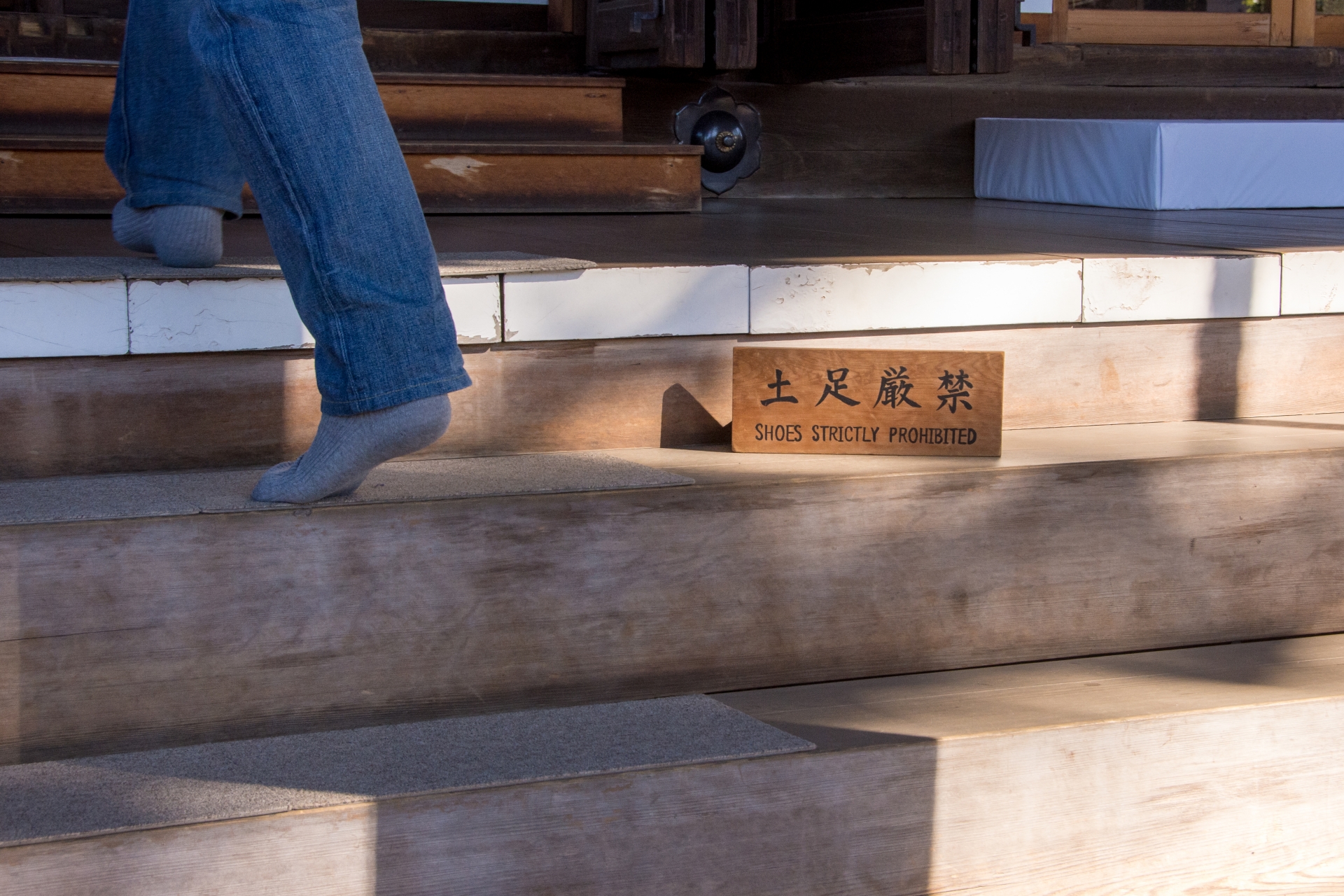
The Magic of the Genkan: Why That One Small Step Matters
I tell my friends that the Japanese entrance, or 'Genkan,' is like a psychological air-lock. In 2026, even the ultra-modern apartments in Azabudai Hills have this distinct drop in floor level. It’s your cue to stop. I made the mistake once of assuming that because a floor looked like concrete, it was okay for shoes. Nope! If it’s past that first step, it’s 'inside' (Uchi). The rule is absolute: your outdoor shoes must never, ever touch the elevated indoor flooring. This is about more than just dirt; it’s a deep-seated respect for the purity of the home. When I remove my shoes now, I make sure to turn them around to face the door. It’s a habit called 'Soroeru,' and it’s a tiny gesture that earns you massive respect from Japanese hosts. To make sure I never miss a sign or a subtle hint about etiquette, I always have my high-speed eSIM ready to look up local norms on the fly
Savvy Choice
Japan Connectivity eSIM
I use this to quickly check etiquette guides or translate signs at entrances. It’s my digital safety net when I'm unsure of the rules.
Secure My eSIM Now
. It’s particularly useful in rural temples where the signs might only be in Japanese. I’ve also noticed that in 2026, many public spaces like onsens have upgraded to biometric shoe lockers—you scan your palm, and your shoes are magically tucked away. But even with all that tech, the basics haven't changed: if there is a step, the shoes come off. And please, for the sake of your own dignity, check your socks for holes! I once had to spend an entire afternoon in a high-end tea house with a giant hole in my big toe. I’ve never felt more exposed in my life!
The 'Wet Weather' Protocol
Japan’s 2026 rainy seasons are managed with incredible efficiency. I love the new ultrasonic umbrella dryers you’ll find at most entrances—no more dripping wet plastic bags! If your shoes are wet, use these tools immediately. Bringing a damp shoe onto the stone of the Genkan is fine, but never let it drip onto the wood. It’s these small attentions to detail that separate a 'savvy' traveler from a mere tourist.
The Slipper Hierarchy: Don't Fall into the 'Toilet Trap'!
Once your shoes are off, you'll likely be handed a pair of indoor slippers. This is where it gets tricky for us Westerners. There is a hierarchy of footwear that I had to learn the hard way. First rule: Slippers are for wood and carpet, but they are strictly FORBIDDEN on tatami (woven straw) mats. If you step on tatami with slippers, it’s like wearing muddy boots on someone's white silk bedspread. I’ve seen hosts literally gasp when a guest does this! But the real danger is what I call the 'Toilet Trap.' Most Japanese restrooms have their own special pair of slippers. You swap your house slippers for the toilet ones at the door, and then—this is the crucial part—you MUST swap them back when you leave. I've done it... I've walked all the way back to a dining table wearing the bright pink 'Toilet' slippers, wondering why everyone was suddenly busy looking at their laps. It is the ultimate cultural faux pas! In 2026, I always double-check my feet before I leave any restroom. For a truly smooth experience, I recommend booking your stays through a platform that focuses on high-end traditional hospitality
Logistics Pro
Expedia Luxury Ryokan Collection
I always use Expedia to find ryokans that offer a traditional experience but are welcoming to international guests. It's the best way to practice your shoe game!
Find My Perfect Ryokan
. These places usually give you a gentle 'orientation' so you don't have to figure it out by trial and error. Whether you’re in a 200-year-old Kyoto machiya or a sleek 2026 boutique hotel, remember that the slippers you wear are a silent signal of how well you understand the space you're in.
Strategic Footwear: Why I Ditch the Laces in 2026
If there’s one piece of practical advice I can give for your 2026 Japan trip, it’s this: Laces are the enemy! Think about your average day—you might be taking your shoes off ten times a day between temples, restaurants, and shops. I remember standing at the entrance of a crowded temple in Nara, struggling with my high-top boots while a line of twenty people waited behind me. I felt the 'Meiwaku' (nuisance) vibes radiating off everyone! Now, I only travel with high-performance slip-ons or 'step-in' sneakers. In 2026, there are some incredible 'Travel Loafers' that look formal enough for a nice dinner but slip off in three seconds. It makes the transition at the Genkan feel like a smooth, professional move rather than a clumsy struggle. I’ve also invested in what I call my 'Etiquette Socks'—clean, high-quality, and often 'Tabi' style (split-toe). They are comfortable for 20,000-step days and look great if you're provided with traditional wooden sandals. Your shoes are your primary interface with Japan. If they are a hassle to take off, you’ll start avoiding those beautiful hidden shrines just because you don't want to deal with the laces. Don't let your footwear limit your experience! Choose shoes that respect the flow of Japanese life and you'll find that the whole country feels much more accessible.
| Shoe Choice | My 2026 Savvy Rating | The Blogger's Truth |
|---|---|---|
| Technical Slip-Ons | 5 Stars | The absolute king of Japan travel. Fast and easy. |
| Loafers / Moccasins | 4 Stars | Great for looking sharp while staying flexible. |
| Laced Sneakers | 2 Stars | Good for hiking, but a nightmare at temple gates. |
| Ankle Boots | 1 Star | Unless you love holding up crowds, leave these at home! |