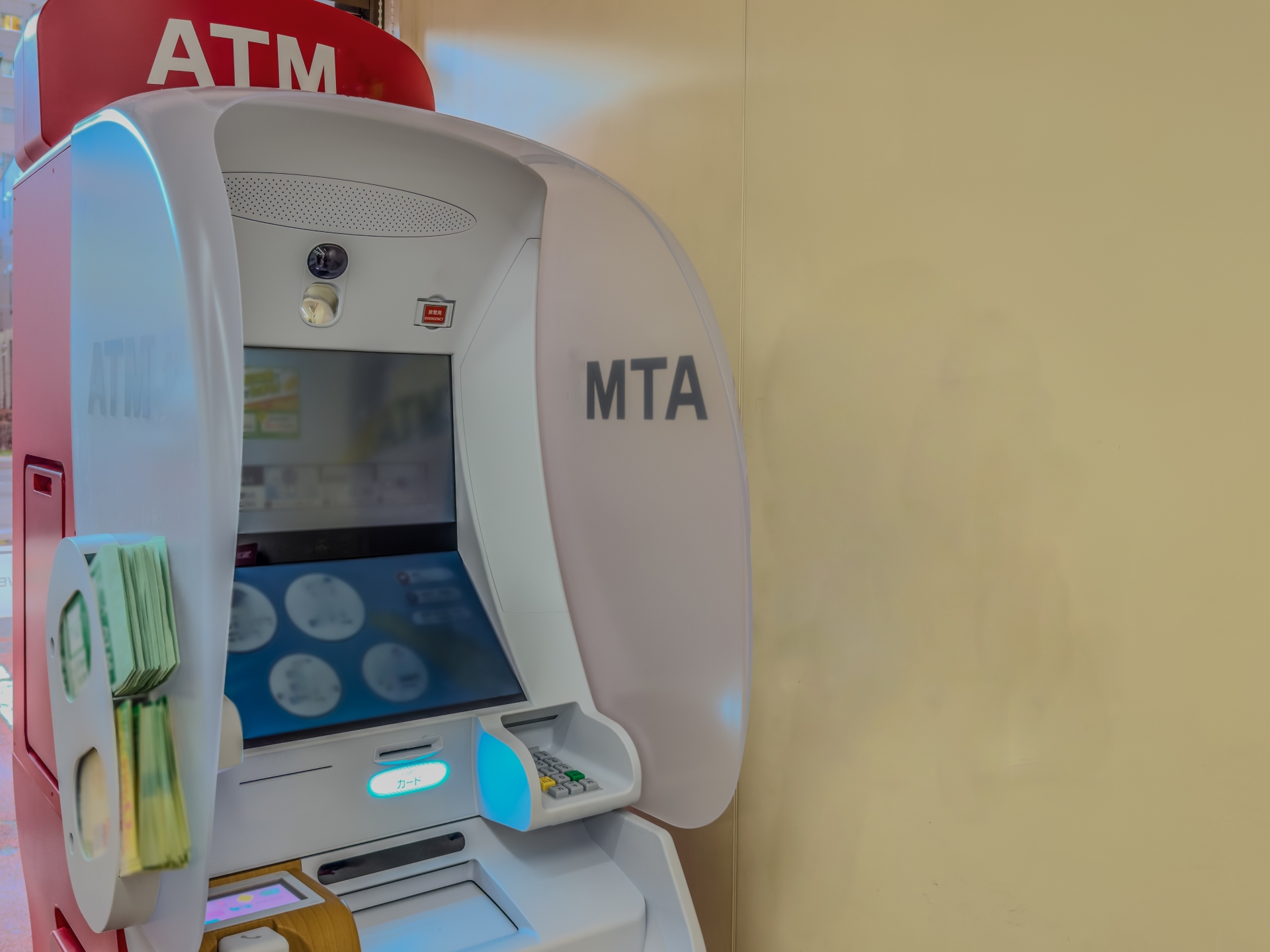
Seven Bank Dominance: Why It’s My Go-To Office in 2026
Every time I land at Narita or Haneda, my first mission is to find a 7-Eleven. In 2026, their 'Seven Bank' ATMs are the undisputed heroes of international travel. While many smaller Japanese banks have started restricting foreign cards due to new security rules, Seven Bank's fourth-generation machines are built for us. They support every card I’ve ever thrown at them—Visa, Mastercard, even my niche neobank cards. Most of the time, I’m only paying a flat fee of 110 yen for small amounts or 220 yen (about the price of a coffee) for anything over 10,000 yen. But the real reason I love them is the speed. In the crowded halls of Shinjuku or Shibuya, these machines detect my international card instantly. I don't have to scroll through complex menus; I just pick my language and I'm out in 60 seconds. I always use my cash for the 'real' Japan—the small family-run izakayas and the hidden rural temples that still don't take Apple Pay. By having my transport pre-paid with something like a JR Pass
Liquidity Saver
Japan Rail Pass (Klook)
I use this to pre-pay my heaviest transport costs. It significantly reduces the amount of cash I need to carry every day for trains.
Check Best 2026 Pass Rates
, I can save my hard-earned cash for these local treasures. It’s a huge relief knowing I have access to these ATMs 24/7, especially when I’m in a rural town in Tohoku where everything else closes at 5:00 PM. I’ve also noticed that Seven Bank machines in 2026 have much better biometric security for locals, but for us, the good old chip-and-pin still works like a charm. Just don't forget to take your card! I once left mine in the machine in Kyoto because I was too excited about my fresh stack of yen. Don't let the 'atm brain' get you!
The 4th Gen Interface Secrets
The new 2026 screens are much clearer than the old ones. I love the new 'Receipt via QR' option. Instead of another piece of paper to lose, I just scan the QR code with my phone, and it goes straight into my travel budget app. It makes tracking my yen spending almost fun, and it’s one less thing for me to carry in my bulging wallet.
The DCC Trap: How I Nearly Paid a 7% 'Stupidity Tax'
This is the most important thing I can tell you about money in 2026: DO NOT let the ATM convert the currency for you. When you’re at a Lawson or FamilyMart (E-net) ATM, you’ll often see a professional-looking screen asking if you want to be charged in your home currency (USD, EUR, GBP) at a 'Guaranteed Exchange Rate.' It looks so safe and helpful! But I call it the 'DCC Trap'—Dynamic Currency Conversion. In 2026, these rates are often 5% to 8% worse than what your bank would give you. If you click 'Yes,' you’re essentially handing over enough money to buy two high-end bento boxes. I always, always click 'No' or 'JPY' so that my bank at home handles the conversion. I’ve noticed Lawson Bank ATMs have become much more aggressive with these prompts lately. They even use 'Gold' and 'Platinum' colored buttons to make the bad choice look more premium! But Lawson does have one pro move: they often allow you to withdraw up to 200,000 yen in a single sitting, which is double the Seven Bank limit. If I’m heading to a luxury ryokan in Hakone that I booked through a premium site
Logistics Pro
Expedia Traveler-Friendly Hotels
I search for hotels that handle digital payments easily, so I can save my physical cash for the hidden local gems that only take yen.
Find My Tokyo Hub Hotel
, I’ll sometimes use a Lawson ATM to get a larger sum of cash at once to pay for my local city taxes or special room service extras. It saves me from doing multiple withdrawals and paying the 220 yen fee twice. Just stay focused on that screen—avoid the DCC trap, and you’ll keep your money where it belongs: in your pocket.
Smart Liquidity: My Strategy for Avoiding Fixed Fees
To really win the money game in 2026, you have to look at the 'Fixed Fees' from your own bank. Most banks charge a $5 or £5 fee every time you use a non-network ATM abroad. If you withdraw 5,000 yen every day, you are bleeding money. My savvy strategy is to withdraw the maximum 100,000 yen (about $650-$750 depending on the current rate) in one shot. This means I only pay that $5 fee once. In 2026, I also make sure to use a card like Wise or Revolut that gives me a certain amount of free withdrawals every month. It’s a total game-changer. I’ve also learned to check my bank's app before I land at Narita to make sure my 'Daily Withdrawal Limit' is set high enough. There’s nothing worse than standing at an ATM in a busy Tokyo station and having your card rejected because your bank thinks it's fraud! I also avoid JP Post Bank ATMs now if I can help it. They are reliable, but in 2026, their per-transaction limit is still stuck at 50,000 yen for international cards. That effectively doubles my bank fees if I need more cash! I’ve put together a small matrix of the 2026 fee landscape below. One final blogger tip: Japan is a place where clean money is respected. Keep your fresh yen in a nice wallet. I’ve seen 2026 high-end vending machines and hotel pay-stations reject notes just because they were too folded or dirty. Treat your cash with respect, and Japan will treat you perfectly.
| ATM Network | My Savvy Rating | The Blogger's Truth |
|---|---|---|
| Seven Bank (7-Eleven) | 5 Stars | Fastest, cheapest, and most reliable. My #1. |
| Lawson Bank | 4 Stars | Good for large amounts, but watch for the DCC trap! |
| E-net (FamilyMart) | 3 Stars | Ubiquitous, but watch out for late-night fee spikes. |
| JP Post Bank | 2 Stars | Reliable but low limits mean double the bank fees. |